Swords Into Ploughshares...
or Warheads Into Loudspeakers

[ Home TNT-Audio | Staff & Contacts | HiFi Playground | Listening tests | DIY & Tweakings | Music & Books ]
Author: Mark Wheeler - TNT-Audio UK
Published: October, 2026
The Euterpe Project is a reference system and a 50 year odyssey in loudspeaker and amplifier design and construction: Onwards and upwards on the learning curve, with a few diversionary traverses en route.
“Is this real life or is this just fantasy?” Ask Plebs Chorus, borrowing a familiar phrase, “The road to Hell is littered with the shattered hardware of failed best of both worlds hybrid dreams.”
Wanting everything means wanting something close to the best achieved in every parameter by every great system ever heard by your Old Scribe:
“Obviously this is impossible,” challenge Plebs, stage left, “All system building is about trade-offs and compromises.”
Very quickly it became apparent that only DIY can deliver every personal preference in a stereo playback system. From what your Old Scribe has learned on this journey, it might actually now be possible to achieve something close to this with far less personal effort and only a little more expense. There are a handful of ageing (sorry chaps) experts in the business who, after years of experimentation, can theoretically meet some of the requirements somewhat more straightforwardly. Who they are will be revealed towards the end of the journey. This is a very long journey and readers are advised to skip the bits that they've already made their minds up about, already know or have no desire to know.
The Genesis of the 'Euterpe' project dates back to a young scribe's formative audio experiences. In 1973 your Young Scribe was given an almost complete set of Hi-Fi News & Record Review back-numbers from about 1962 to 1973 plus a large random collection of Wireless World, The Gramophone and Hi-Fi Sound. Reading every issue cover to cover (including the ads), a young scribe realised that there is no one true path to audio perfection. No two 'experts' could agree on what is important for good audio, let alone how to achieve it.
This was long before the subjectivism/objectivism debate. This was long before any part of this audio planet became a Flat Earth and that famous Scottish turntable was only just starting production. This was before and during the valve-transistor debate. Indeed the period covered by these magazines was the original transition from valves to solid state in domestic audio. This was a period when small portable radios bore with pride the legend solid state.
This was however, towards the end of the first period, during the valve to transistor transition, extensive subjective and objective debates about amplifier sound. This polarisation is not new now but was new back then. There were extensive and detailed discussions about the audibility of class A versus class B versus class AB and the role of local and global negative feedback on this audibility. Sufficiently curious about the diversity of opinion, a young scribe put in a disproportionate amount of effort into getting opportunities to hear Class A transistor amplifiers, push-pull Class A valve amplifiers, Class AB transistor amplifiers and ultralinear configured tetrode amplifiers.
All I learned from this is that amplifiers did indeed sound different and that preferences might change with different loudspeakers. This view was seen as out of date by the mid 70s; it was in total contradiction to the dominant voices in domestic hi-fi literature. Oddly, this view was in complete accord with pro-audio and musician magazines of the day, a complete reversal of the modern situation.
Thus it seemed to be not just the principle of operation but also of the execution of any audio design that made a difference. So much for amplifiers, which most English language comics of the mid 1970s stated ought to be the least significant audio devices compared to transducers like loudspeakers and pickup cartridges.
“The Old Scribe's just on a nostalgia trip,” accuse plebs, stage left, “Researching this series of articles is another equivalent of Proust's Madeleines in À la recherches du amps perdu”
Listening at the numerous high street audio emporia and department stores or record shop hi-fi departments, that existed in typical 70s and 80s British towns, brought a wealth of experience of audio quality and style of presentation. The quality differences were often at odds with what was written in the sacred texts. This young future scribe began to realise that nothing was as clear cut as the reviews suggested. Experienced retailers pointed out, to this obviously penniless customer, that system matching is more important than isolated performance. The interfaces between audio system components and the room they're in became as much of interest as the gear itself.
During school holidays, trips to the nearby metropolis Birmingham would include time in the splendid public library reading old AES papers as well as loitering in record shops. Pre digital public libraries back then had reference libraries only limited by the history of printing, whereas today digital researchers are limited by what is actually online and accessible. Our little tribes of art, music and audio obsessed friends made trips to London. The attractions included the big and small free admission art galleries, the record shops and the music shops of Denmark Street and Shaftesbury Avenue. In the latter we would hear the differences between the sounds of various instruments, developing those neural pathways that would be exercised in concentrated critical listening to audio systems. We loitered impecuniously in the audio retailers, especially around Tottenham Court Road, where staff not much older than us would happily devote hours demonstrating gear and expressing opinions. There, these patient staff seemed to relish interested youth keen to learn, even though a sale was hardly likely. Visiting the Bexhill-on-Sea store and chatting with Wilf Harms of Falcon Electroacoustics, we also dived into the granularity of crossover design (including the granularity of ferrite inductor cores) and Malcolm Jones of the same company also contributed a wealth of knowledge. What goes around comes around and here on tnt-audio.com is the opportunity to pass this forward.
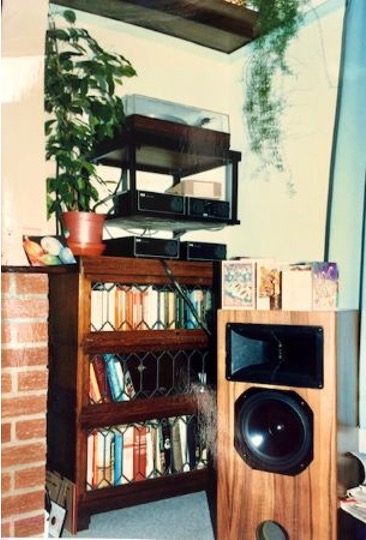
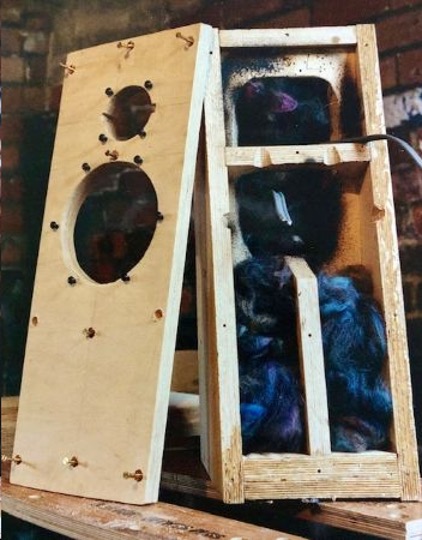
Which brings us to loudspeakers, the most expensive part of those pre-1973 audio systems. The old stalwarts of the Gramophone magazine and ofHi-Fi News (both pre and post the merger with Record Review) all agreed that loudspeakers had the most profound effect on music reproduction in the home.
“The old scribe has lapsed into the syntax of the gentlemanly old Hi-Fidelity magazines of yore” observe the plebs stage left.
It was obvious that no commercially available loudspeaker system contained every feature that each manufacturer claimed was essential for good sound.
The same monumental collection of old audio magazines, plus numerous visits to Birmingham public library to access their collection of journals of the Audio Engineering Society, provided enough material on the subject of loudspeaker design and construction to undermine any possibility of a young scribe doing sufficient homework for school.
Three things became apparent, again:
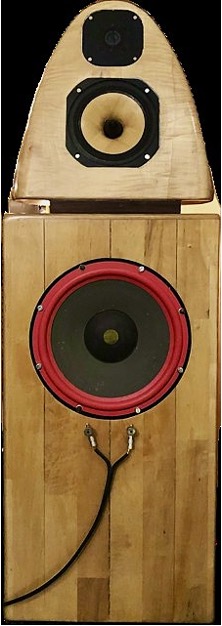
I am indebted to the time given by Wilf Harms and Malcolm Jones for their guidance in crossover design and execution. Mr Harms patrolled the counter of the Bexhill-on-Sea DIY loudspeaker shop Falcon and explained how crossovers are unique to their drivers and cabinet designs. He patiently explained the importance of balancing various factors when choosing inductors, thinner or thicker wire, core size, air core vs ferrite core, dc resistance, power handling behaviour. He also wrote the seminal article on series and parallel crossover choice. Fortunately, what didn't sink into the grey matter of that 13 year old scribe at the time was reiterated to an older scribe, by Malcolm Jones, years later. Frankly it seemed that doing away with the [link ../casse/active_speakers_intro1_e.html] nuisance passive crossover could only be a good thing. And lo! There were two articles in my extensive collection of pulped trees that explained the limitations of passive crossovers and the advantages of active crossovers. Falcon still supply DIY and repair spares for many vintage classic designs, especially the LS3/5a. Malcolm supplied some custom built compound slope active crossover boards for the first really successful Euterpe build, the prototypes for those Decca London Ribbon and Focal 10N501 boxes in the picture above. Indeed, your Old Scribe now attests that passive crossovers are a dismal accident of history and the anachronistic primitive hi-fi model of capitalism (passive upgraditis) that nobody would invent if starting the whole thing from scratch today.
Clive Sinclair (of '70s affordable pocket calculators, ZX computers, and ahead-of-its-time C5 electric urban transport) offered 'active filter modules' as part of his innovative but often fragile audio electronics range, notably the Project 80 modules. Late 70s UK amplification newcomers like Nytech and Crimson Electric, Naim and Exposure also offered active crossovers. Pro sector loudspeaker companies also had active crossovers available through tie-in arrangements with electronics companies. The earth became flatter. Not only did a 'front end first' philosophy start to challenge the existing loudspeaker priority, but these same upstarts (especially the Naim-Linn arrangement) included the transition from passive to active drive in their designated upgrade paths.
Something is happening and you don't know what it is!
Which often contributes to entrenched positions into which groups are expected to invest, regardless of possible alternatives.
“As if round vs flat earth shape debates aren't enough, complain plebs,” stage left, “now the Old Scribe is indulging in even more geometric befuddlement.”
To build various loudspeakers and play with various configurations of known commodities is the way to learn what does what in what context.
Drivers were obtained from scrap radiograms, radios and other thrift sources, modified and built into assorted boxes. Fairly quickly it seemed that what goes on below 150-300Hz tends to demand or favour completely different approaches from those needed above c300Hz, in both power amplifiers and loudspeakers. The popular 2-way configuration with a mid-woofer handling everything below about 2kHz seemed rather silly. In fact it seemed like it is designed to suit economical passive crossovers (with smaller cheaper components than would be needed at 200Hz) and minimum drive unit numbers. The complexity of passive 3-way crossovers would drive prices up and only Jordan/Bandor seemed dedicated to 2-way systems with 150Hz crossovers.
Furthermore, only a handful of loudspeaker designers and manufacturers seemed remotely interested in off-axis performance; Jordan/Bandor and Richard Allen being an exception to this too. The vast majority of loudspeakers seemed to have a high frequency radiator, known as a tweeter operating from between 1500-3000Hz upwards. Thus there is a sudden change of dispersion from a narrow beam at the top of the mid-bass driver response to much wider dispersion when the tweeter kicks in. All these loudspeaker designs also have a complicated passive crossover (whether in the electrical domain or the electro-mechanical domain by using lossy materials in the drivers) at the most sensitive zone of human hearing. Ideas like Ted and Doreen Jordan's crossovers at 150Hz seemed more sensible but sadly needing many (expensive) drivers.

Obviously there can be no other conclusion than to build various prototypes of loudspeakers and find out exactly what does what to the sound. All your Old Scribe seemed to have established was that there is no best approach from 20Hz to 20kHz. When people say X, Y or Z approach is absolutely the best way to do music reproduction, they are merely telling you what works best for them to achieve their particular X, Y or Z priority. Whether X, Y or Z is their priority is merely the expression of what they first noticed when they began to be interested in music reproduction, or at some other revelatory moment.
As psychologist Dorothy Rowe notes, “Wanting everything” can imprison us in perfectionism that ultimately often leads to depression. For audiophiles it means that we end up in the constant cycle of upgrades: Obsession - Distress - Compulsion - Temporary Relief - back to Obsession again. CBT, narrative and psychodynamic psychotherapy are three effective treatments. The Euterpe project is another!
The task is to identify how much of each system behaviours is “just good enough” and to design a system to meet just those needs and no more. Otherwise we may constantly switch our audio systems between the many different philosophies and products. One year it might be the Linn-Naim Flat Earth; next year we might pursue the big energy big soundstage massive push-pull valves and planar speakers; later, on hearing the delights of the thread drive turntable, single ended triodes and big horns, we sell the ceiling height electrostatics and buy horns the price of a house.
The Euterpe project, named after the muse of music, aims to satisfy just enough of all these approaches to create a satisfying system...
for as little money as possible!
Jeff Beck: Blow by Blow recent reissue |


DISCLAIMER. TNT-Audio is neither a shop, nor a HiFi company or a repair laboratory for HiFi components. We don't sell anything. It is a 100% independent magazine that neither accepts advertising from companies nor requires readers to register or pay for subscriptions. If you wish, you can support our independent reviews via a PayPal donation. After publication of reviews, the authors do not retain samples other than on long-term loan for further evaluation or comparison with later-received gear. Hence, all contents are written free of any “editorial” or “advertising” influence, and all reviews in this publication, positive or negative, reflect the independent opinions of their respective authors. TNT-Audio will publish all manufacturer responses, subject to the reviewer's right to reply in turn.

© Copyright 2026 Mark Wheeler - mark@tnt-audio.com - www.tnt-audio.com
[ Home TNT-Audio | Staff & Contacts | HiFi Playground | Listening tests | DIY & Tweakings | Music & Books ]