A Visit to the High End 2026 show in Vienna - Part III
Reporter: Carlo Iaccarino
The show took place from June, 4th through June, 7th 2026 at the Vienna Austria Center, in Vienna, Austria
Originally written (also with AI-assisted translation): August, 2026
Website with plenty of resources: High End Society
Keep on
Here we are at the last episode.
I’d like to point out a few things that struck me — in no particular order — not exclusively for their sonic qualities.
Let’s start with DYNAUDIO.
This year they set up an exhibition space that I liked very much; for me, one of the most beautiful. From an anonymous door — just like all the others in the exhibition halls — you entered a lush tropical forest, surrounded by the sounds of nature: rustling leaves, flowing water, birds chirping and other harmless animal noises, with dim lighting. At the back, a counter and a small meeting room, and on each side two enclosed spaces.
In one of them, they demonstrated the new Opus One sound-bar, which on its own reproduced the multichannel audio of an adrenaline filled car racing movie. Certainly impressive, but my sensitivity toward these gadgets is minimal, so I can’t tell you much more. I didn’t even try to take a photo, because the device was quite large and the room was small and dark, lit only by the projection screen. Terrible conditions for a good photographer — let alone for me 😊
In the other room, instead, they talked about the update to the CONFIDENCE series. They played the CONFIDENCE 30i floorstanding model, priced at around €25,000.
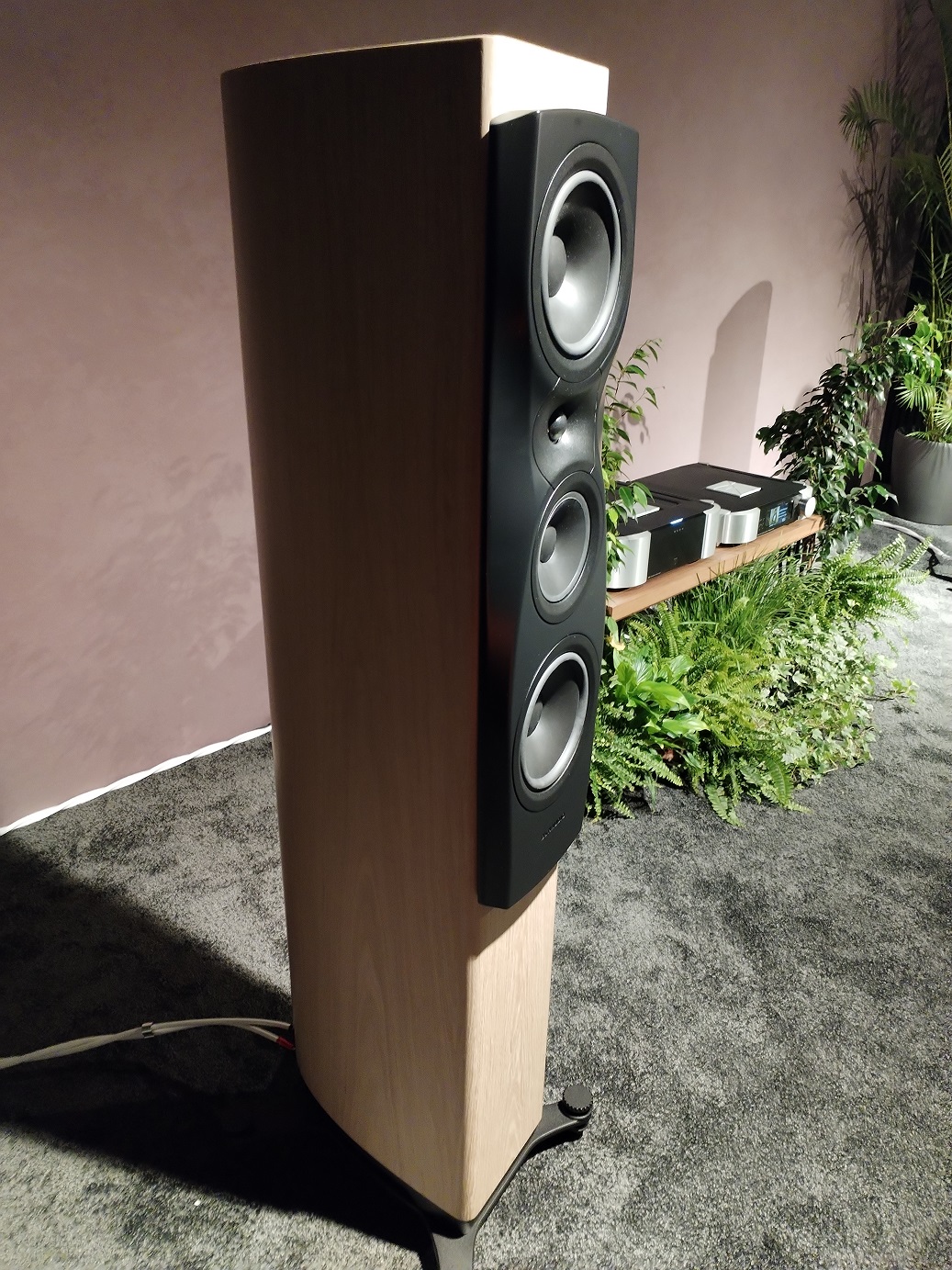
The presentation covered the inevitable improvements to the drivers — something you’d expect from one of the leading driver manufacturers. But above all, they showed us the new type of crossover.
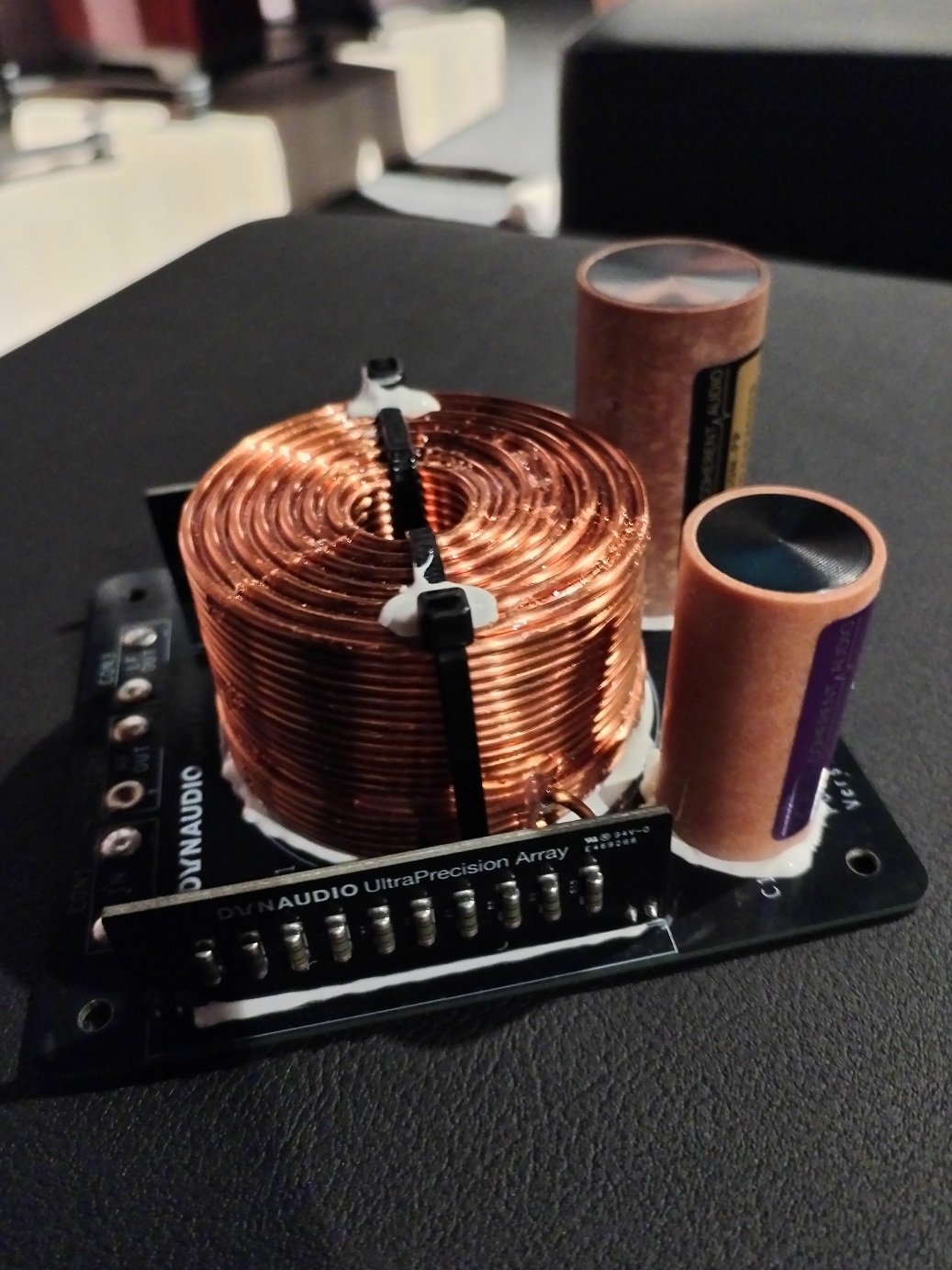
I hope my photo manages to show, in the foreground, the array of precision resistors used instead of the usual high power resistors. This type of resistor is normally used in circuits where components must have an exact value, guaranteed within very tight tolerances, to ensure accurate readings. In fact, they said they were inspired by the internal construction of Audio Precision analyzers (widely used by manufacturers and also by "our" magazines). Normally, these are small resistors found where low level signals pass — much lower than the levels going from the amplifier to the speakers. However, thanks to the number, construction technology, and mounting method of the array, Dynaudio claims to have managed to keep them cool enough not to alter their exact values.
Driving the speakers was a combination of MOON pre/streamer/DAC and power amp, a synergy now typical between the two brands and well proven.
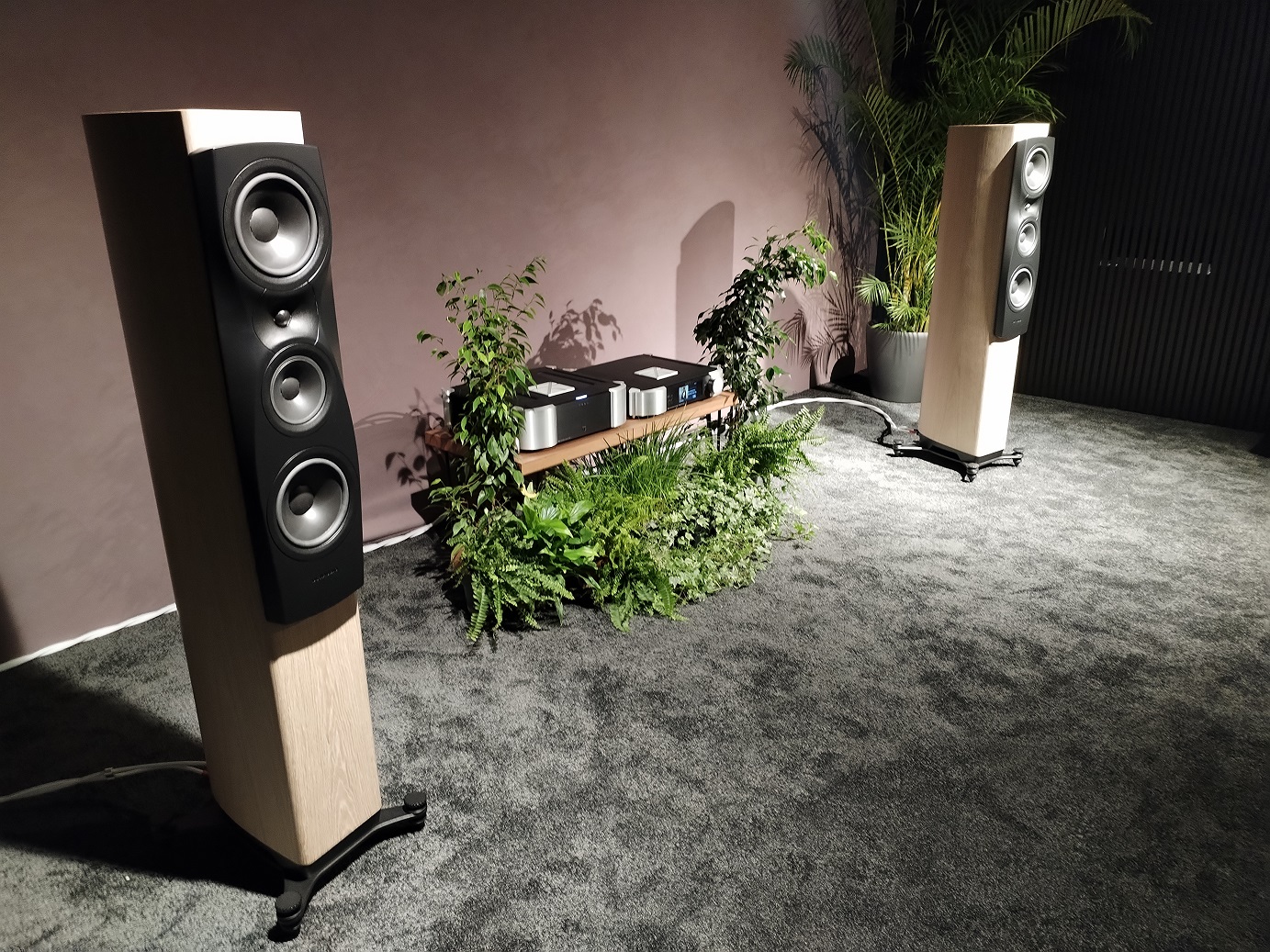
I must say we stayed quite a while listening to the system, and I liked it a lot — one of the best listening sessions I had at the show. Of course, the typical Dynaudio character remains: polite, measured, never showy; sometimes I’ve heard criticisms calling it an aseptic sound. I understand that for certain genres the sound reproduced by these speakers (and the amplifiers, let’s not forget) might seem less suitable, but I repeat, I enjoyed the listening very much, and we ranged from classical music to rock/pop (no, no Hendrix; I’ll tell you about that later…).
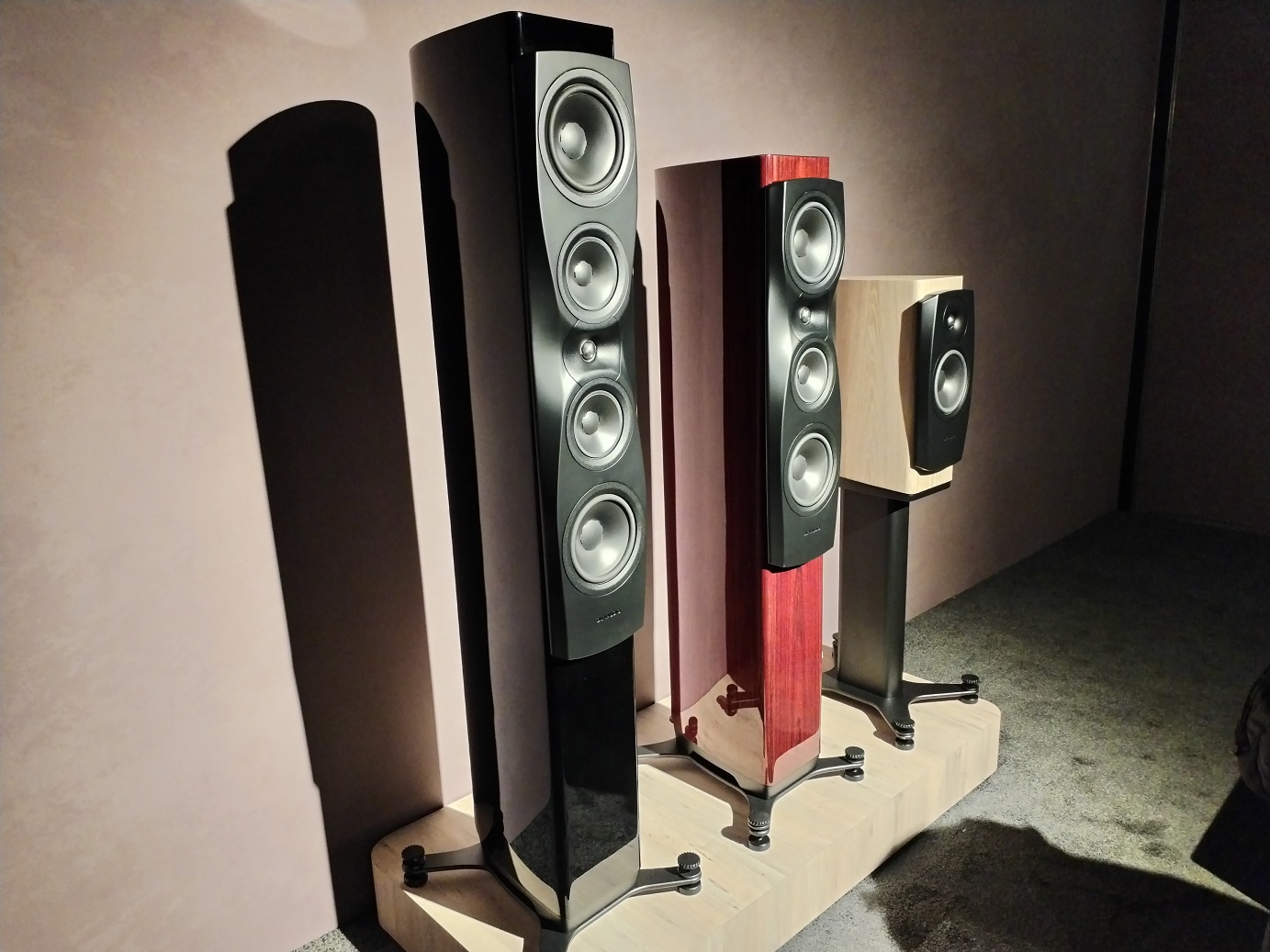
The model we listened to sits in the middle of the series, which includes a smaller bookshelf model, the, CONFIDENCE 20i (€15,000), and a larger floorstanding model, the CONFIDENCE 50i (€50,000). Below they are pictured together. Commercial availability is expected by the end of the year.
It’s worth noting that during my visit, no one mentioned that the company was about to close its U.S. subsidiary — a piece of news now public and also commented on by our Editor in Chief.
We remain in Northern Europe with the Danish CANVAS HiFi.
They offer a sound-bar that stood out not only for its technical design but also for its aesthetic execution.
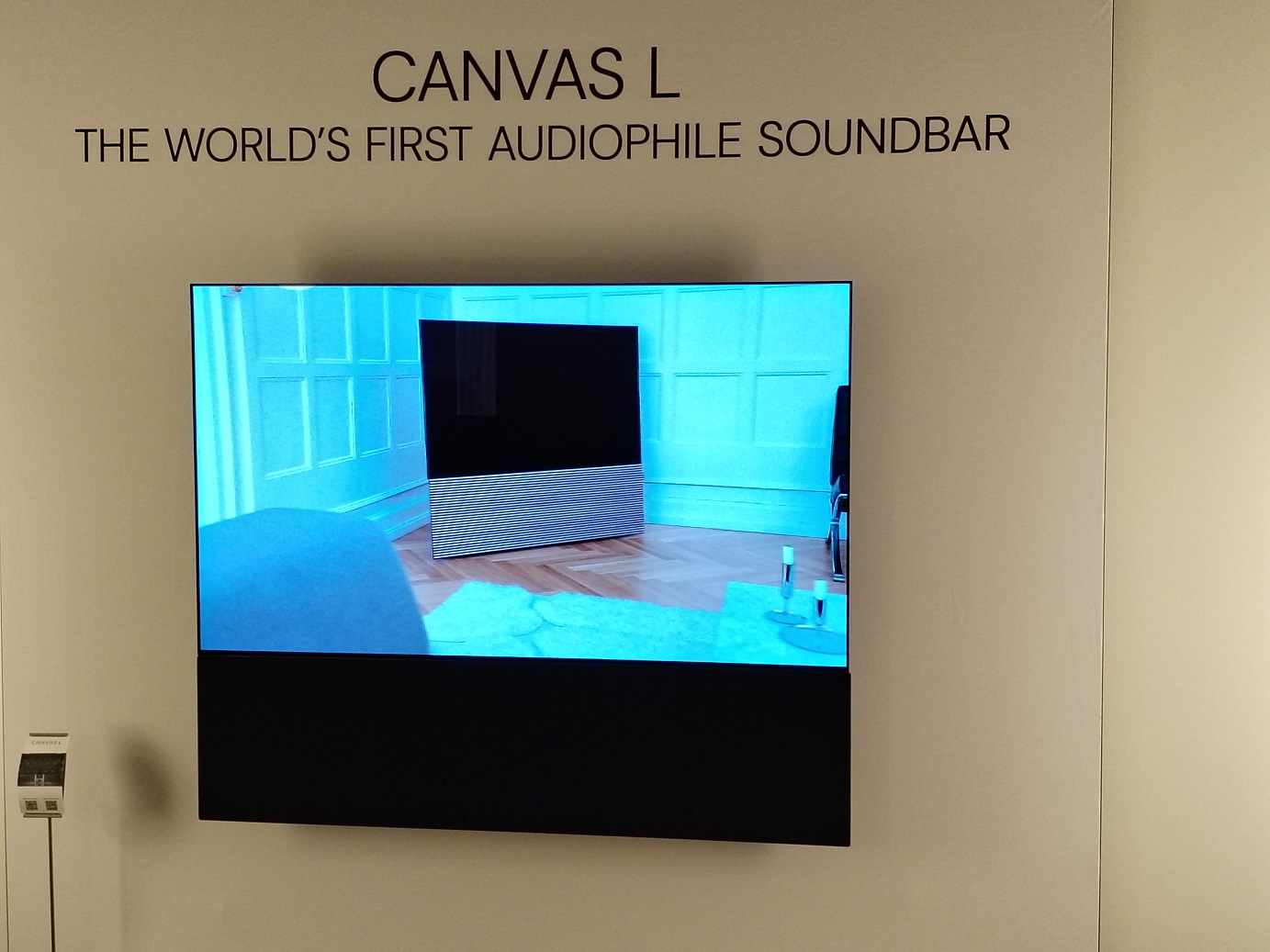
The front panel is packed with drivers, as is now common for sound-bars, but the distinctive feature lies inside, where you find the electronics for both amplification and signal processing — including immersive BACCH processing.
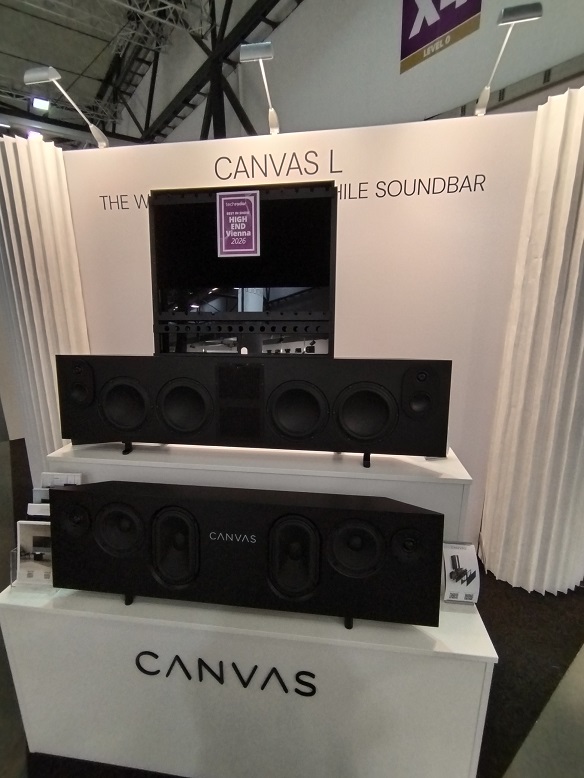
As shown in the previous photo, two devices were presented: the CANVAS L, priced at €6,000, and the smaller CANVAS 2.0, priced at €3,300. Both prices increase depending on the chosen "front grille".
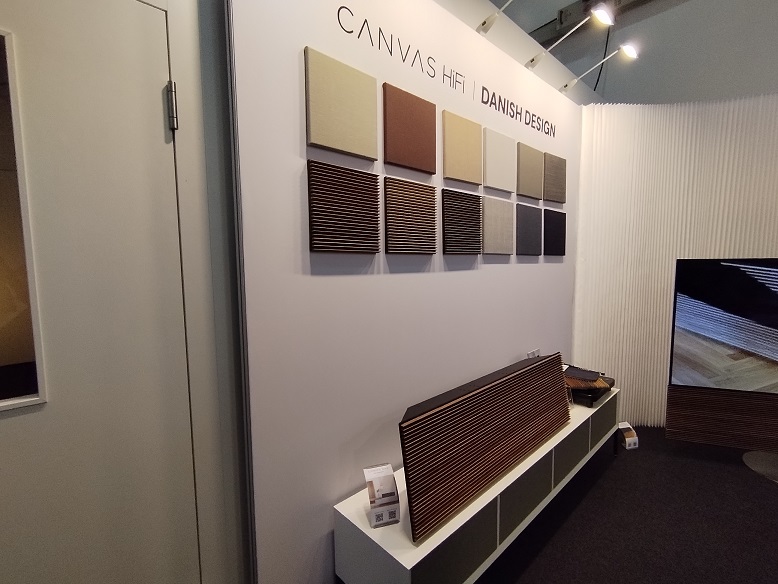
Indeed, another strong point is the aesthetic care of the product, designed to be placed under the screen but also to go beyond mere "integration" with the furniture, aiming to become a piece of furniture itself. For this reason, many versions of the front panel covering the drivers are offered.
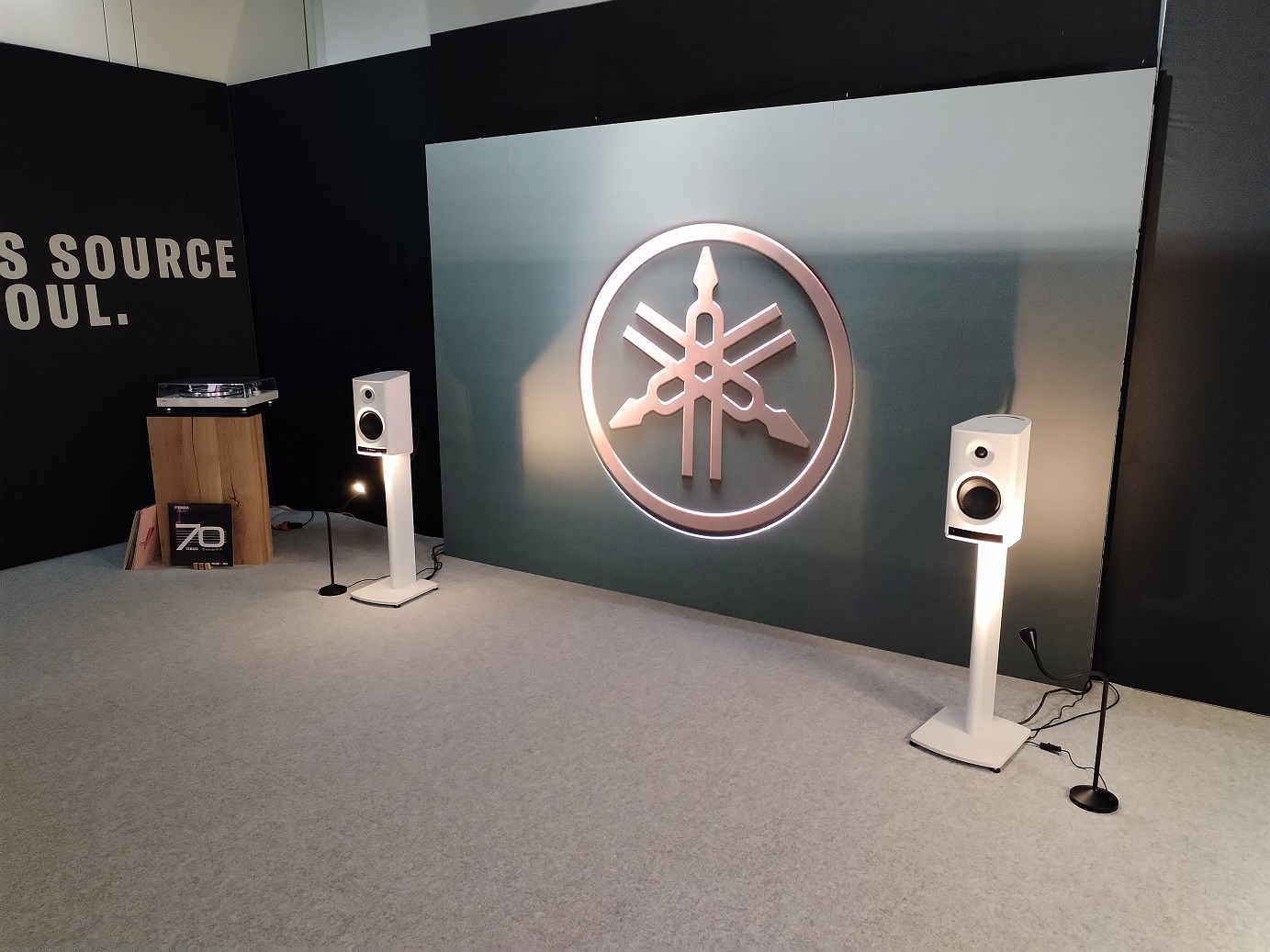
Another interesting thing I saw came from YAMAHA.
It’s the NX-70 A, yet another example of a loudspeaker with the entire system built in, because besides being amplified and equipped with DSP, it also contains the streamer, ready to access Spotify, Apple, Tidal, and Roon directly. It is also a wireless speaker, based on Yamaha’s well proven MusiCast platform, capable of managing multi room systems. At the show it was given a large exhibition space, and I must say it filled it well with sound despite its compact size.
As often happens, one of the two units is the main speaker, with all inputs and outputs; in the photo you can also see the "YPAO" button, another proprietary Yamaha system for automatic room calibration. There is also a line output to drive a subwoofer, as well as an HDMI e ARC port for connection to A/V devices (primarily TVs) that support it. In short, a complete set of connections.
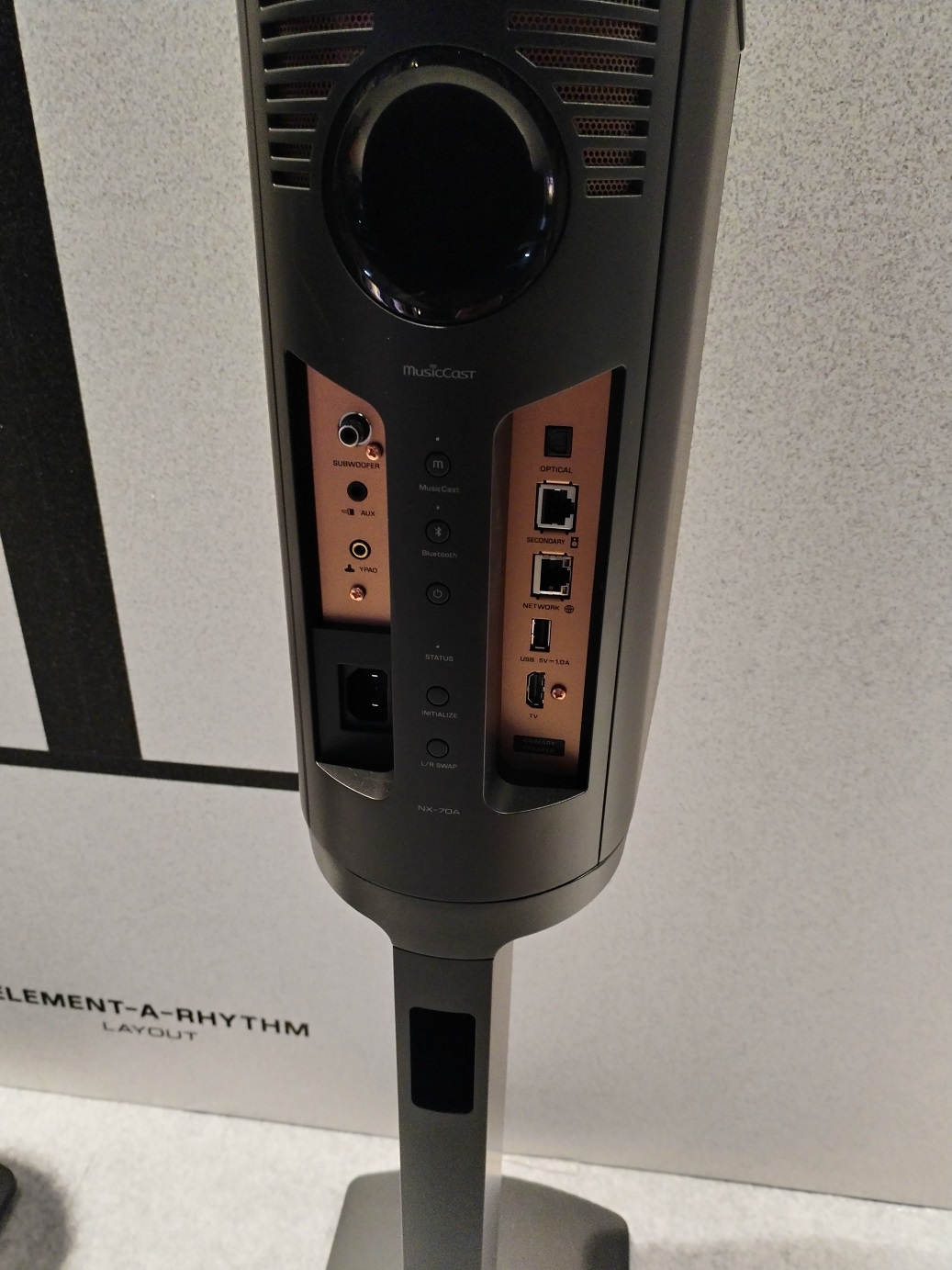
The other speaker can be connected either wirelessly or with a network cable — and this is how it was used at the show. In the following photo you can see the only two connections present: the power cable and the network cable linking it to the main speaker. You can also see how the stand (sold separately) acts as a "cable container" giving the installation a cleaner look.
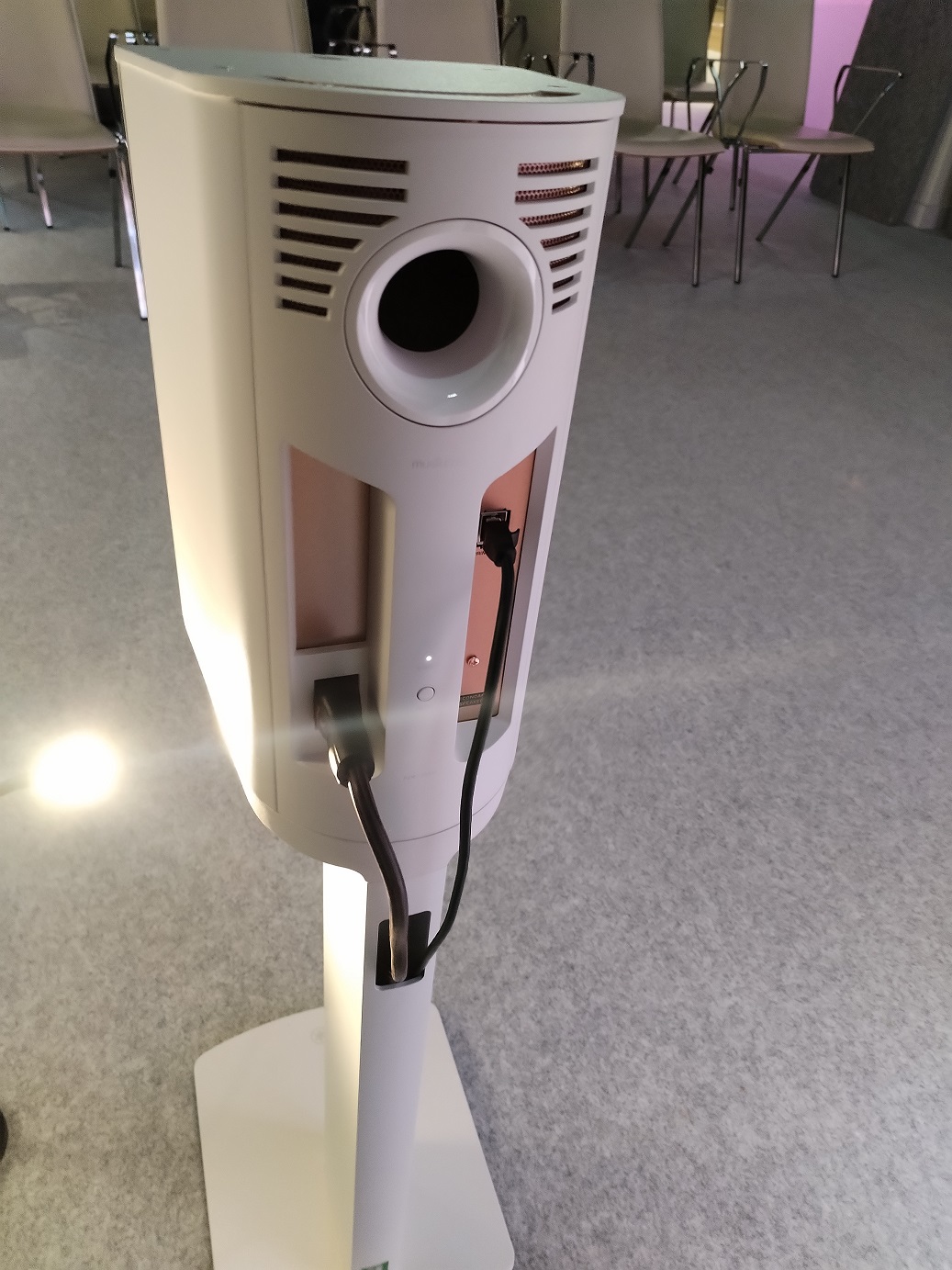
Beyond the functional and technical features — now similar to many other all-in-one speaker solutions — I wanted to highlight this device because it will be offered at around €3,000, a price that is fairly accessible for obtaining, in one go, a well sounding, simple, complete, and sufficiently up to date audio system, one that won’t require worrying about technological obsolescence for a while.
We leave the house of the three diapasons for — forgive the irresistible play on words — the single Italic DIAPASON.
The company was exhibiting its new flagship model, the DIDASCALÌA floor-standing loudspeaker, pictured below together with Alessandro Schiavi, the company's boss.
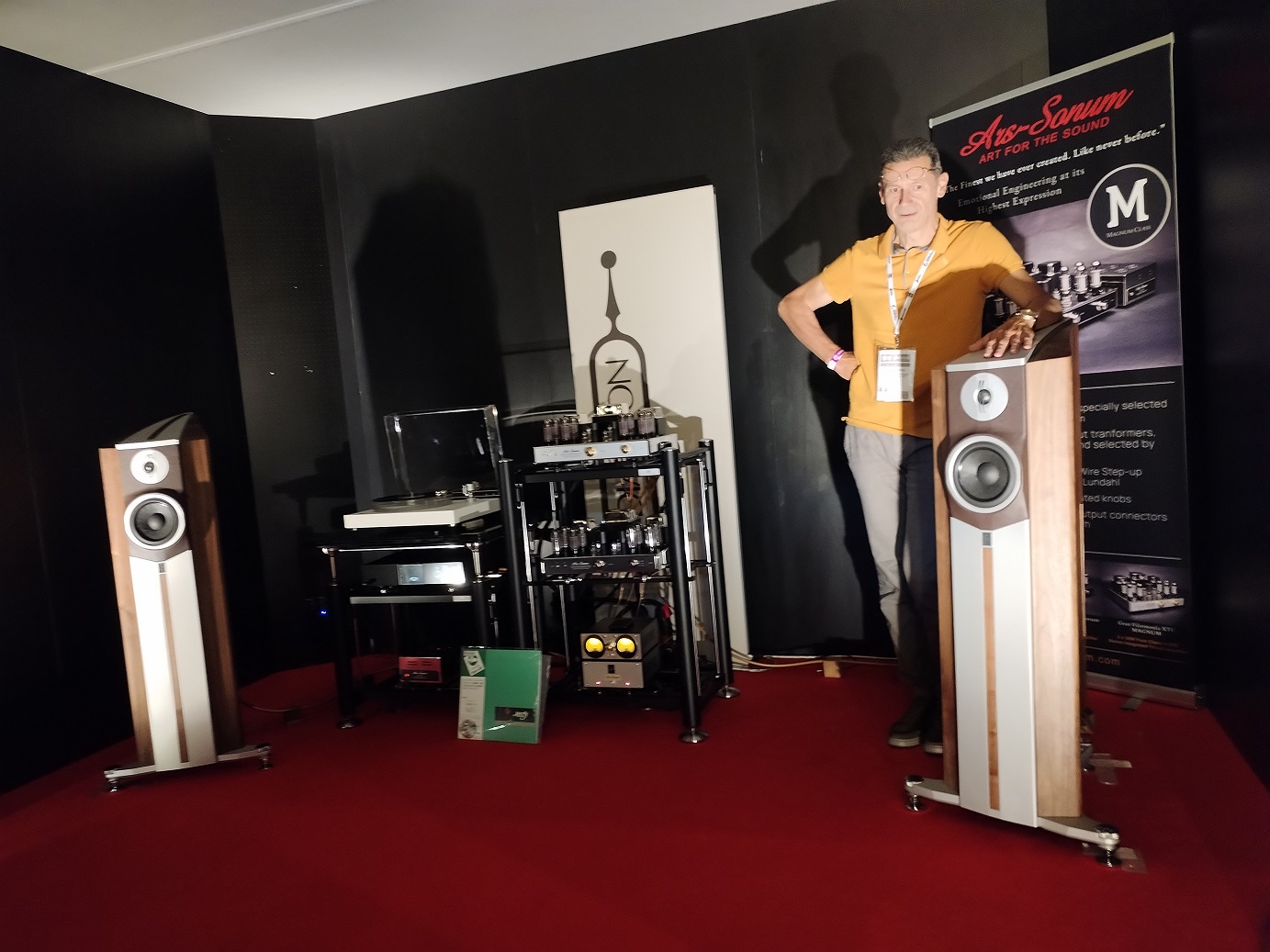
The technical mind behind this new loudspeaker is Paolo Tezzon, formerly with Sonus Faber and now working with another manufacturer from Northern Italy, also very attentive to the use and wooden aesthetics of its speaker cabinets. In the Didascalías, Tezzon has poured all his know how and, above all, has been able to work without worrying (too much) about the budget, using proprietary drivers to create a loudspeaker he can consider his personal reference. Anyway, they are already thinking of expanding the Didascalía line with additional models.
Driving — very well — the Didascalías were the Spanish tube electronics by ARS-SONUM.
Here is the Gran Filarmonía XTC Magnum amplifier, delivering 2 × 30 W in Class A triode mode, priced at €19,000.
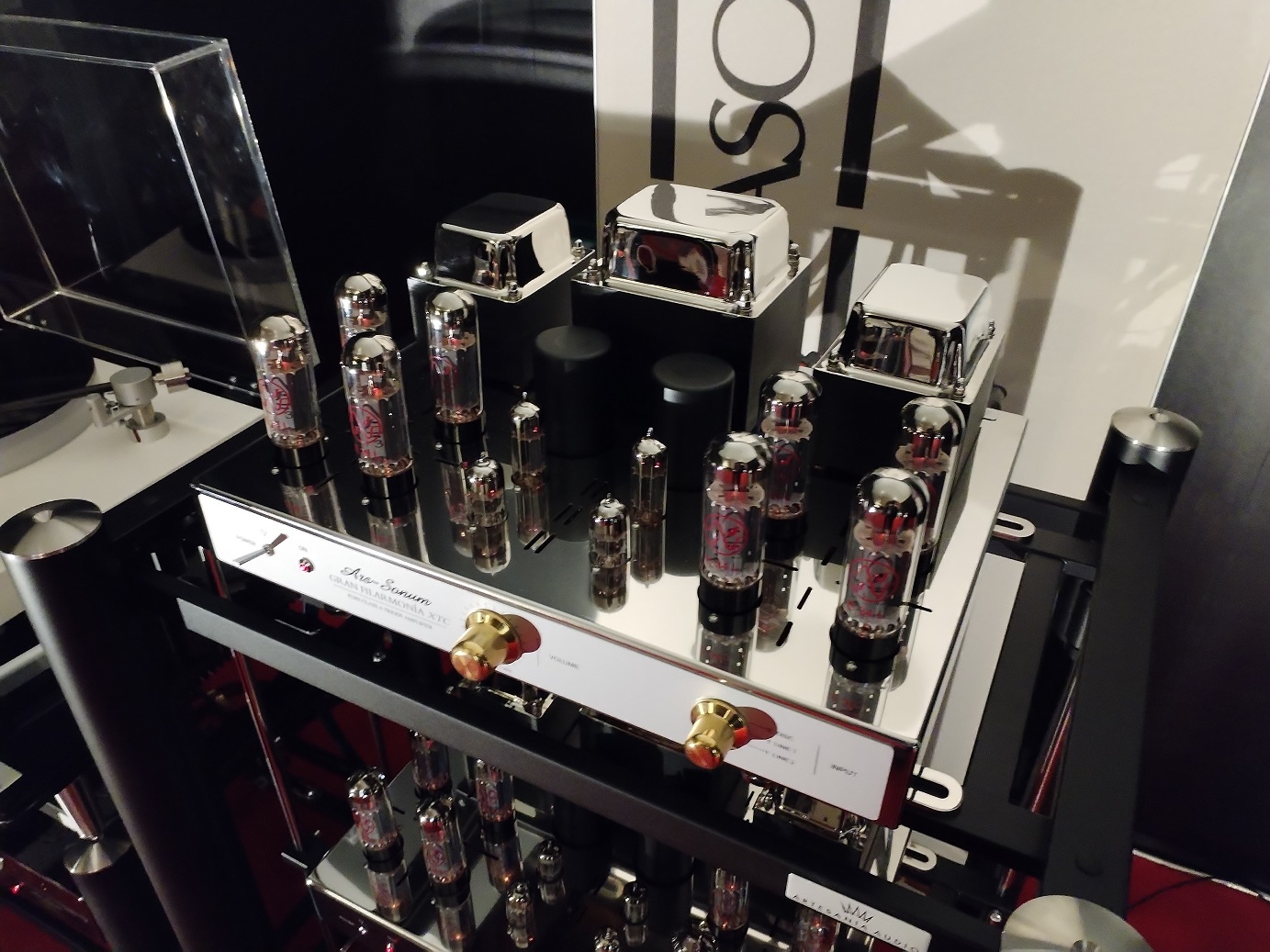
It alternated with the other integrated amplifier, the Gran Filarmonía XF Universum Magnum delivering 2 × 60 W in pentode mode, biased in Class A up to 40 W, priced at €15,000.
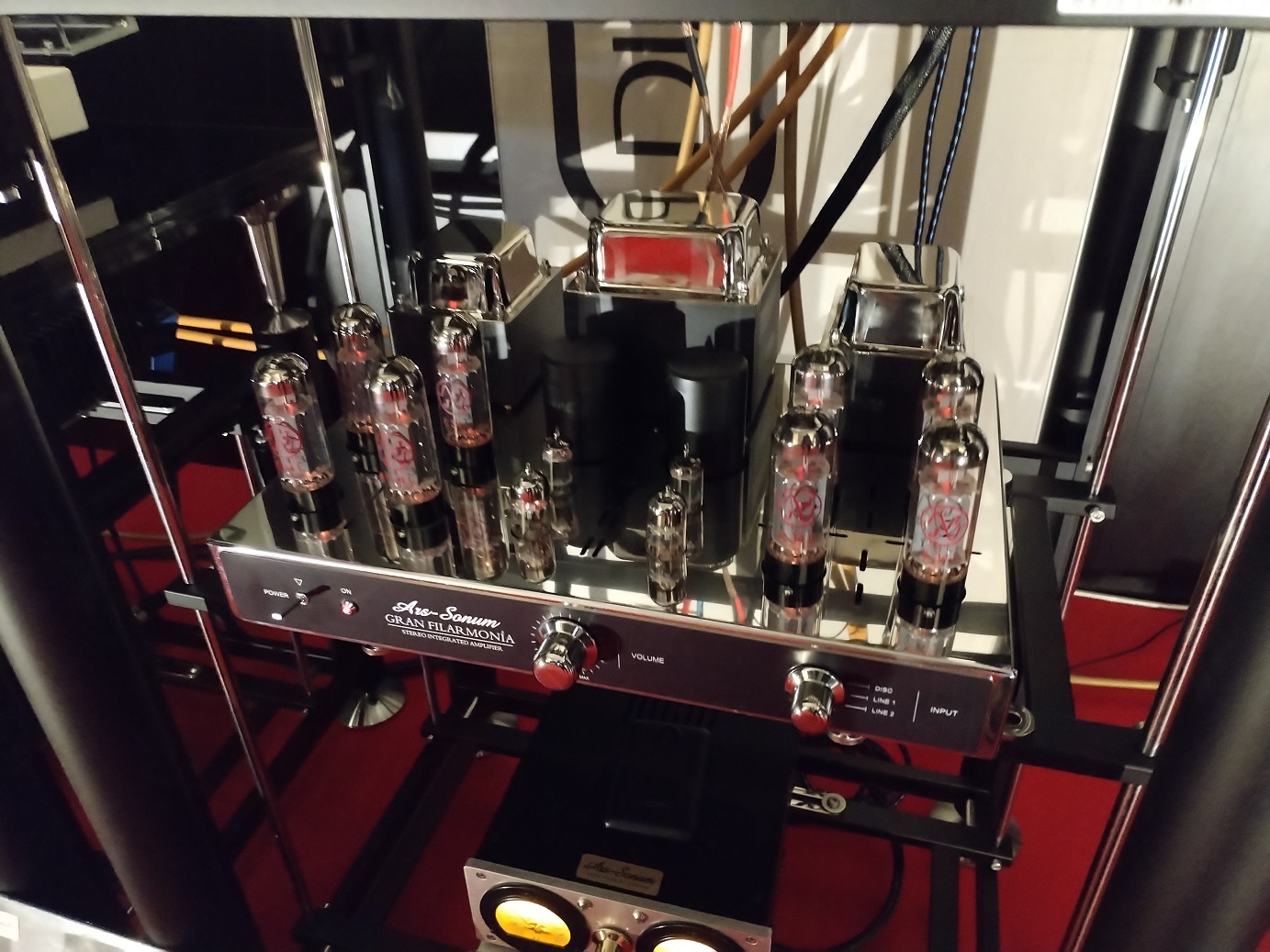
The company also produces two other integrated amplifiers: – the Filarmonía XP Universum, 2 × 32 W in pentode configuration, €5,500; – the Filarmonía XP, 2 × 12 W in triode configuration, around €8,000.
Finally, Ars Sonum also manufactures the Fonía phono preamp, priced around €9,500; you can glimpse it on the bottom left shelf of the system used for the demonstrations.
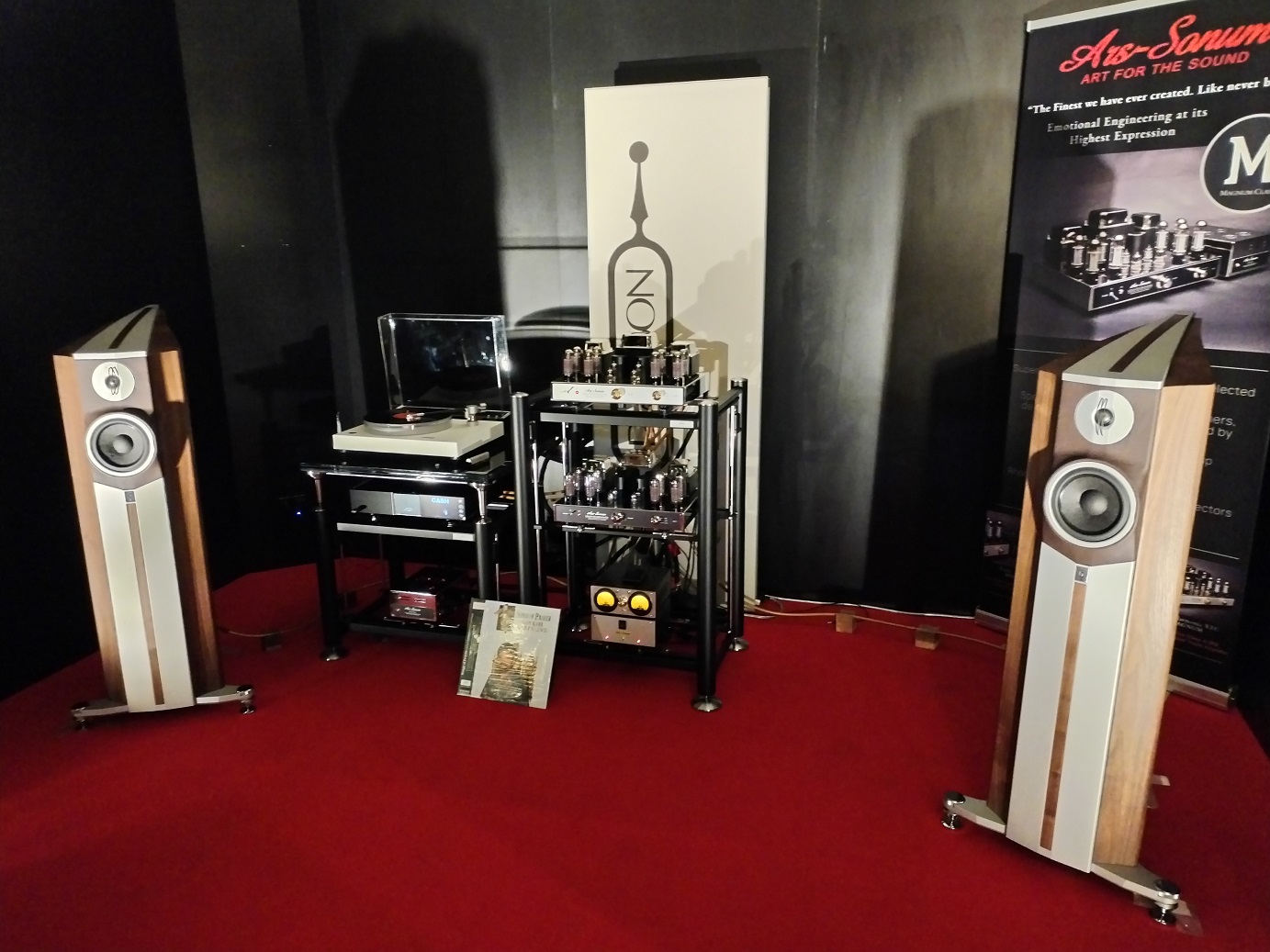
I had the pleasure of chatting with the deus ex machina of Ars Sonum, Jaime Herbada, who emphasized the artisanal nature of his products: hand assembled, transformers included, and built according to proprietary circuits. Allow me also to recall the excellent Iberian hospitality offered to visitors "after hours" when jamón and an excellent red wine — I believe from Tempranillo grapes, though I unfortunately didn’t note the name — were patriotically served.
Miscellany
The show was, as usual, very large, and I won’t even try to tell you about everything I saw (and heard). I prefer to leave you with a few images and brief comments — just enough to stroll together through the various exhibits.
A massive deployment of equipment from the German distributor Audio Reference, which occupied practically one third of Level 1, setting up several rooms with different systems.
Here is the main hall with the mega system composed of VTL and D'AGOSTINO electronics, dCS digital source, VPI analogue source and WILSON loudspeakers.
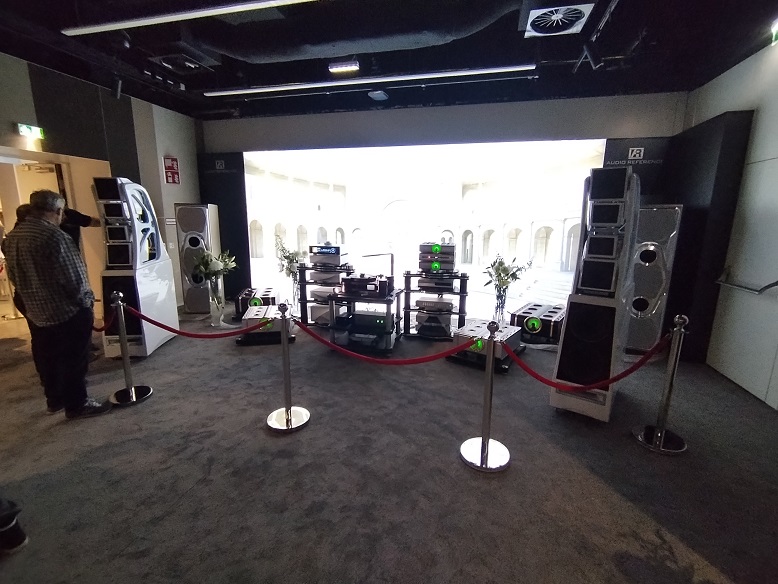
Beyond the huge system, I found the room design very interesting.
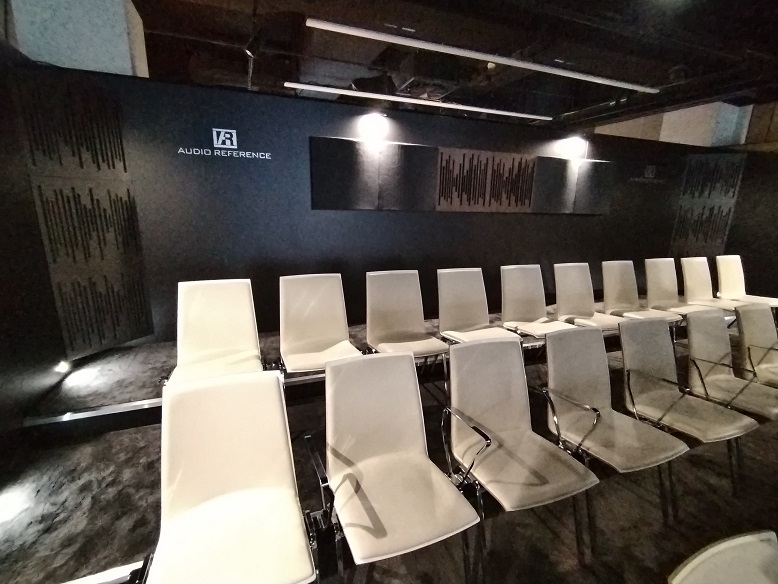
A very large hall, with tiered seating to minimize obstructions in front.
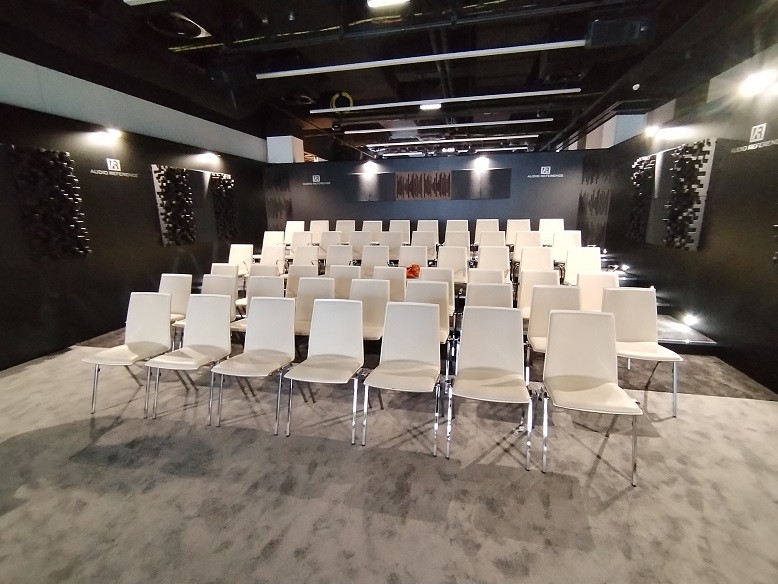
The walls were treated with various UNIVICOUSTIC solutions, starting with MULTIFUSER DC4 panels (€324 per pack of 4, VAT excluded), alternating with CINEMA Round Premium panels (€478 per pack of 8, VAT excluded) on the side walls.
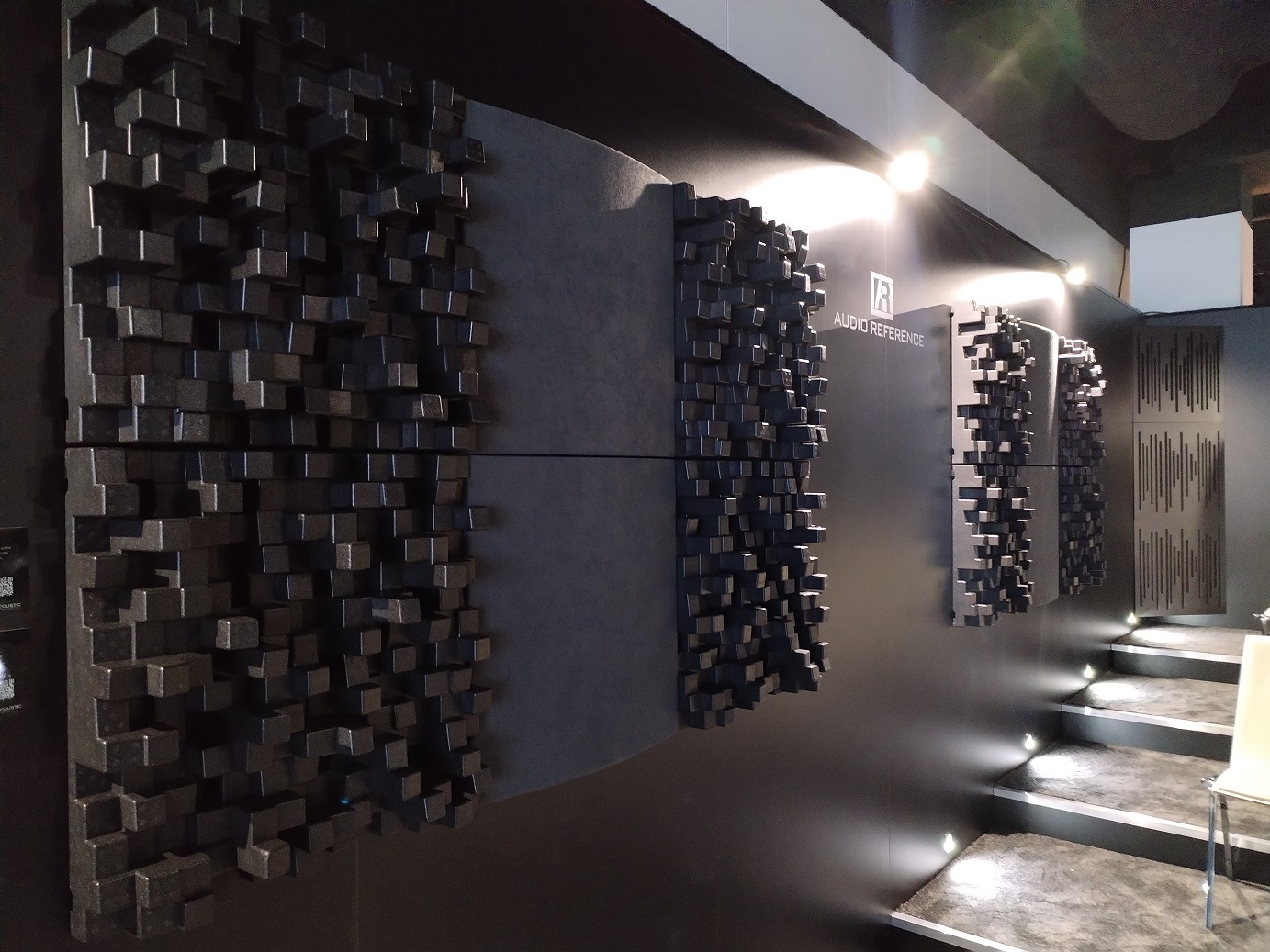
On the rear wall, VicPattern Ultra Wavewood MkII panels (€334 per pack of 3, VAT excluded) were applied, again alternating with the previously mentioned CINEMA Round Premium panels.
Another room hosted equipment from the same brands, but less "extreme", complemented by the STROMTANK power conditioner.
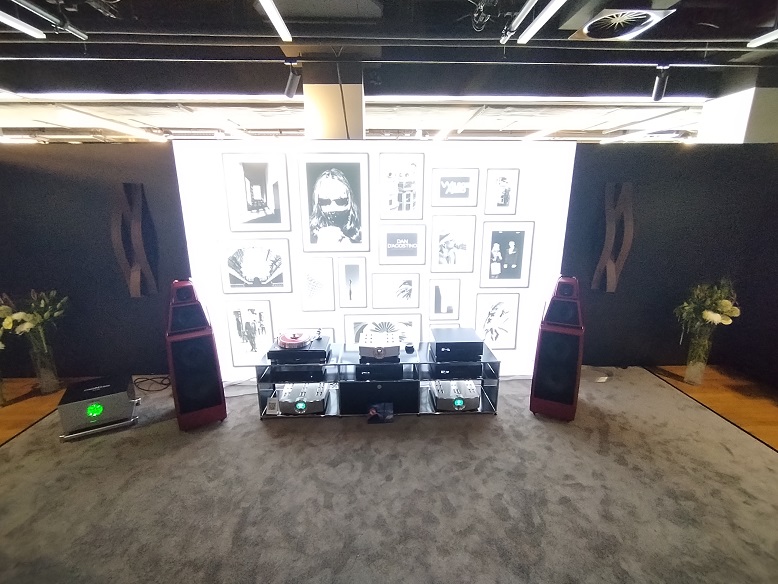
The area was called The Lounge, though I doubt such an abundance of machines could be found in any earthly living room we normally access...
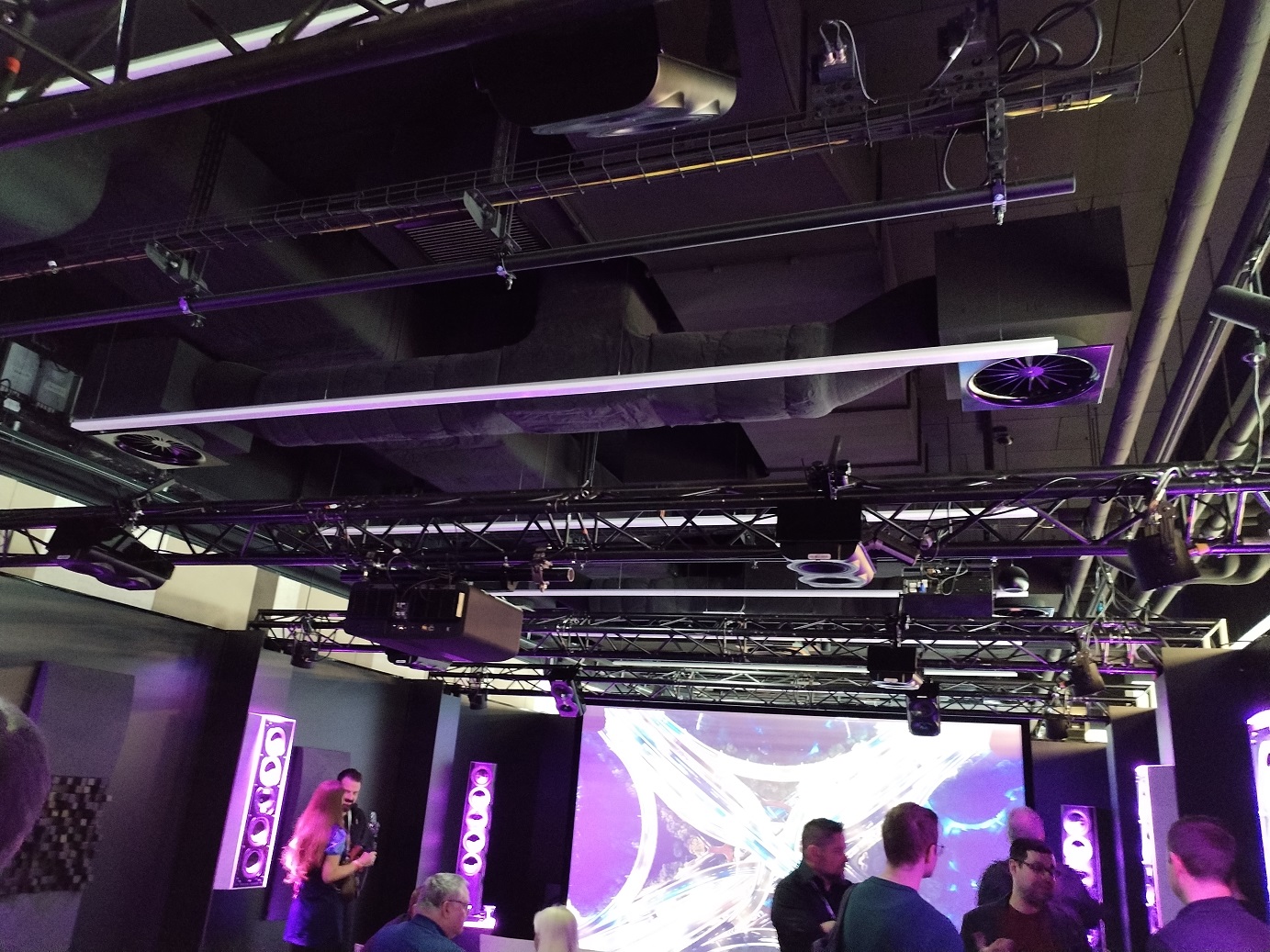
A further installation was dedicated to multichannel A/V, with PERLISTEN loudspeakers.
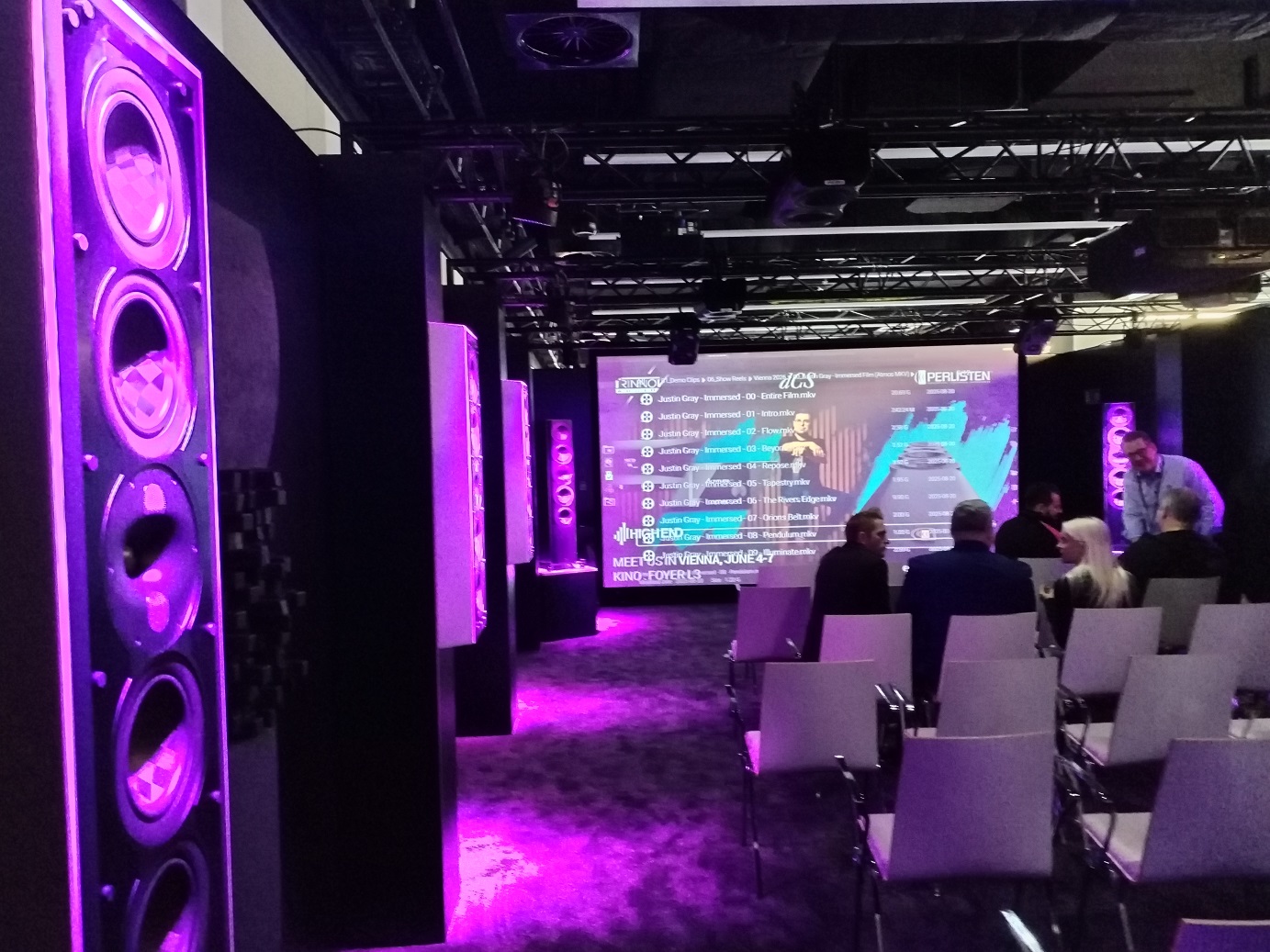
Forgive the following terrible photo — my best attempt to show you the various "height" speakers used for Atmos decoding.
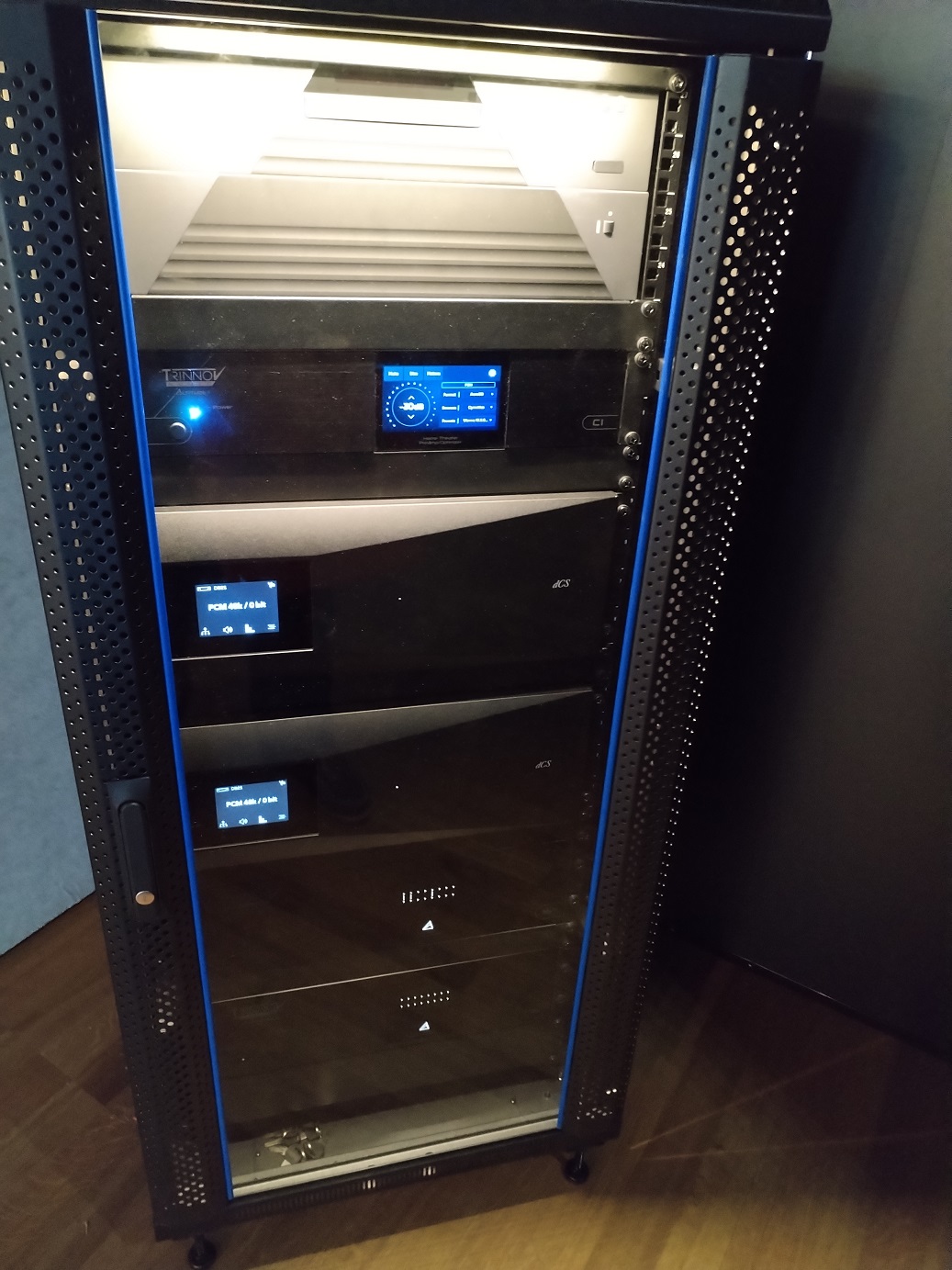
Driving all this equipment was a rack full of electronics: decoding, time alignment, etc., with amplification handled by TRINNOV,
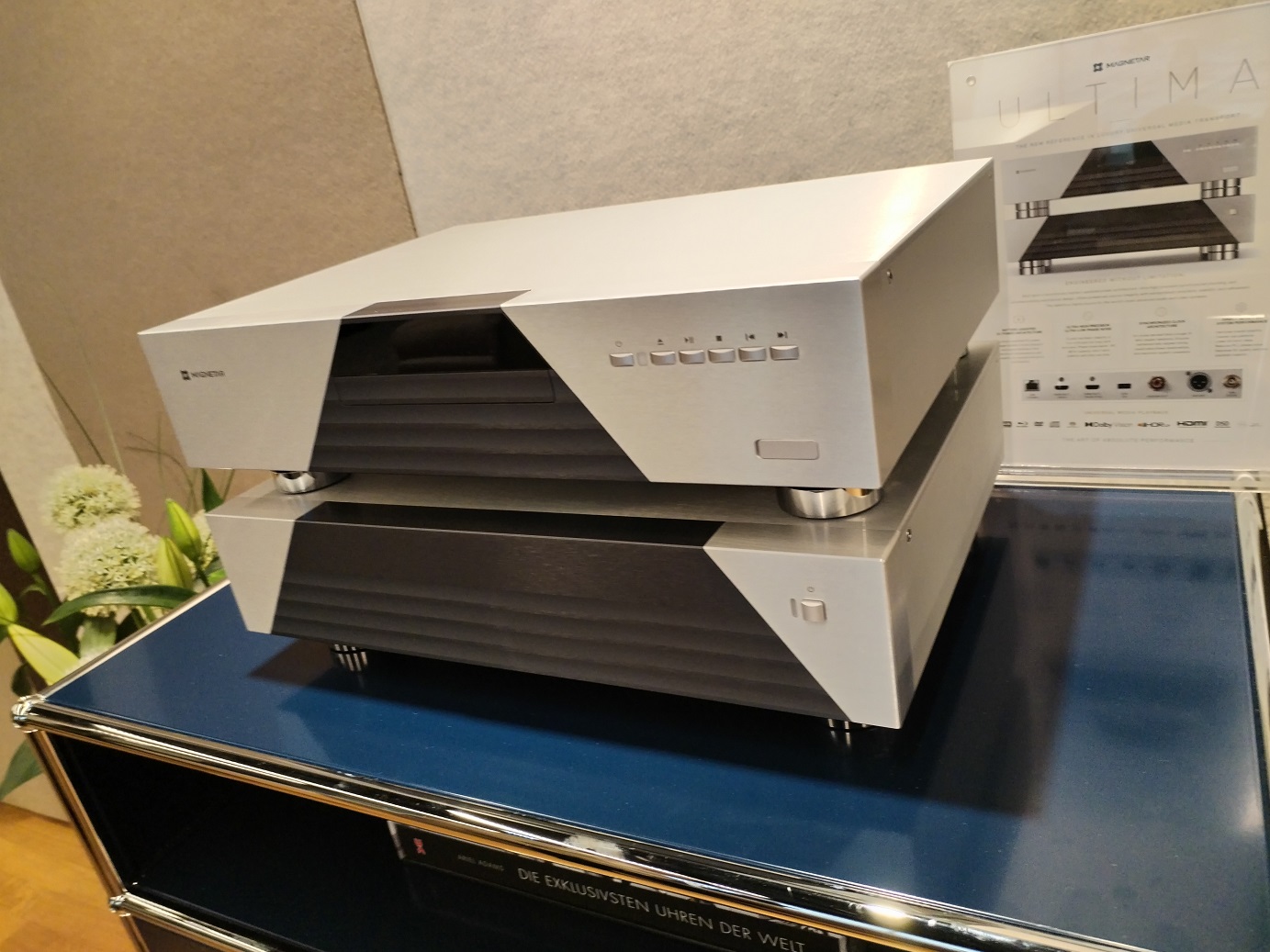
controlled by the brand new two chassis ULTIMA transport from MAGNETAR, priced around €15,000.
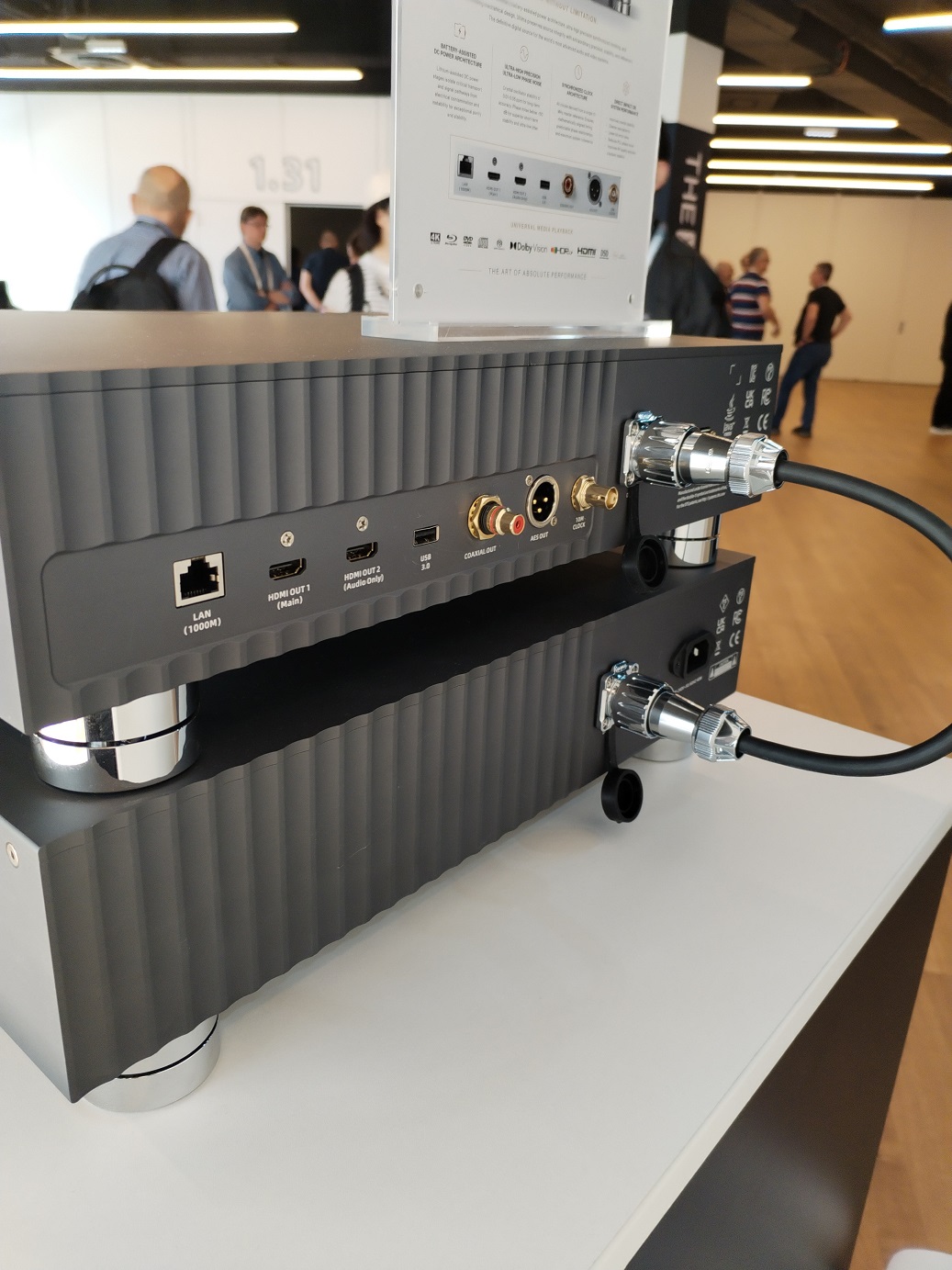
Here is also its "B-side", with the umbilical cord connecting the actual transport to the power supply, which essentially works like a battery, completely isolating the device from the mains, its noise, and its fluctuations.
More snapshots from rooms where I also greatly enjoyed what I heard.
Here is the LUXMAN room, celebrating its first century.
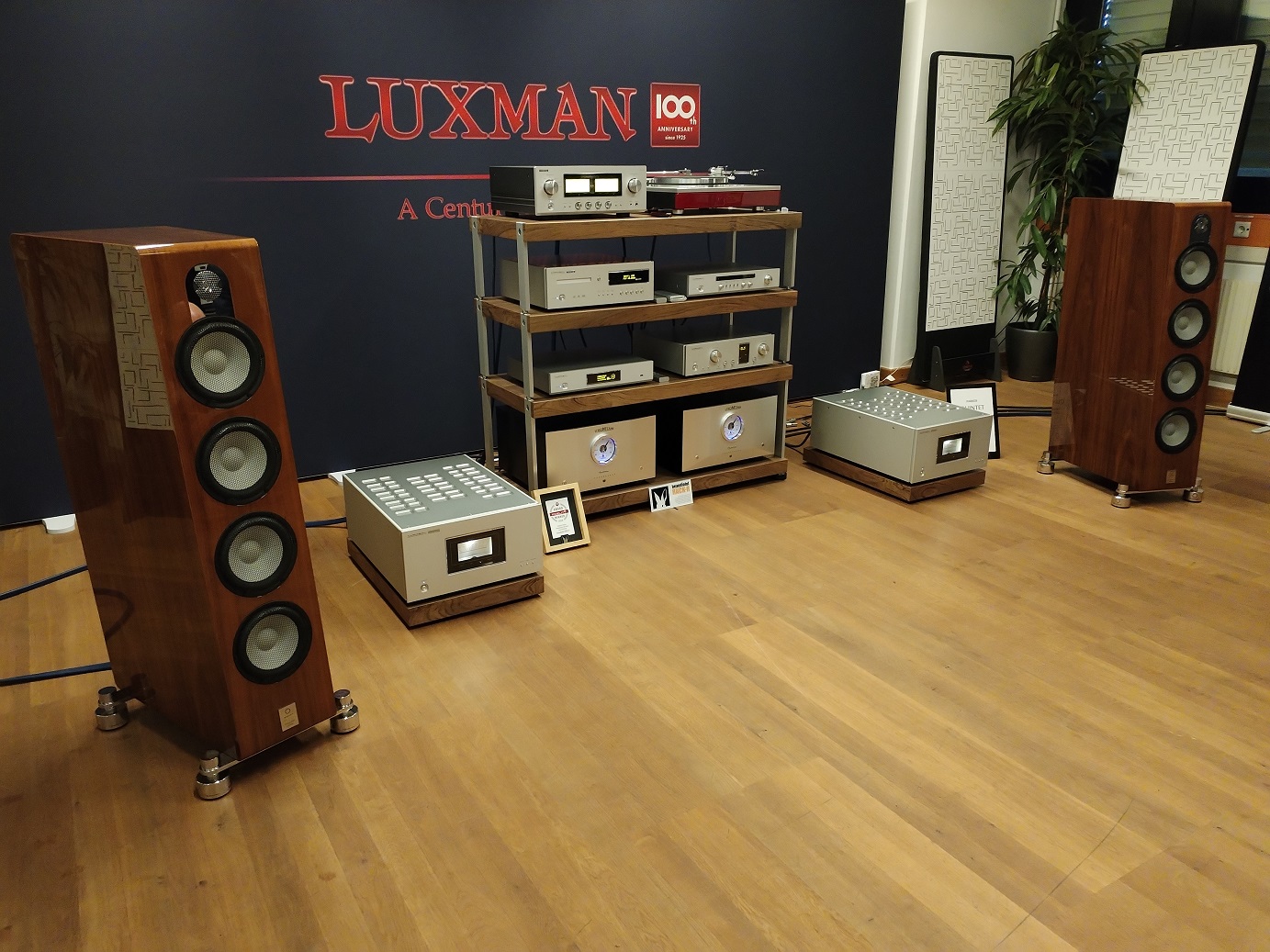
The centennial system consisted of the PD-191-A turntable (about €13,000), the E 07 phono preamp (about €6,500), the NT 07 network player (about €8,000), the D 100 optical disc player (CD and SACD) and DAC (about €20,000), C 10 X preamplifier (about €20,000), and two B 100 Centennial mono power amps (€52,000 per pair).
I listened to a selection of classical music on LP, reproduced in a truly pleasant way — no special effects, no hyper definition excesses. A calm and, I repeat, enjoyable listening session, as this strange hobby of ours should ultimately be.
Another very pleasant listening session took place in the INNUOS room.
This manufacturer had set up a system featuring its NAZARÉ series streamers as the source, with DAC, preamp, and power amps from EMM LABS, and loudspeakers from MARTEN.
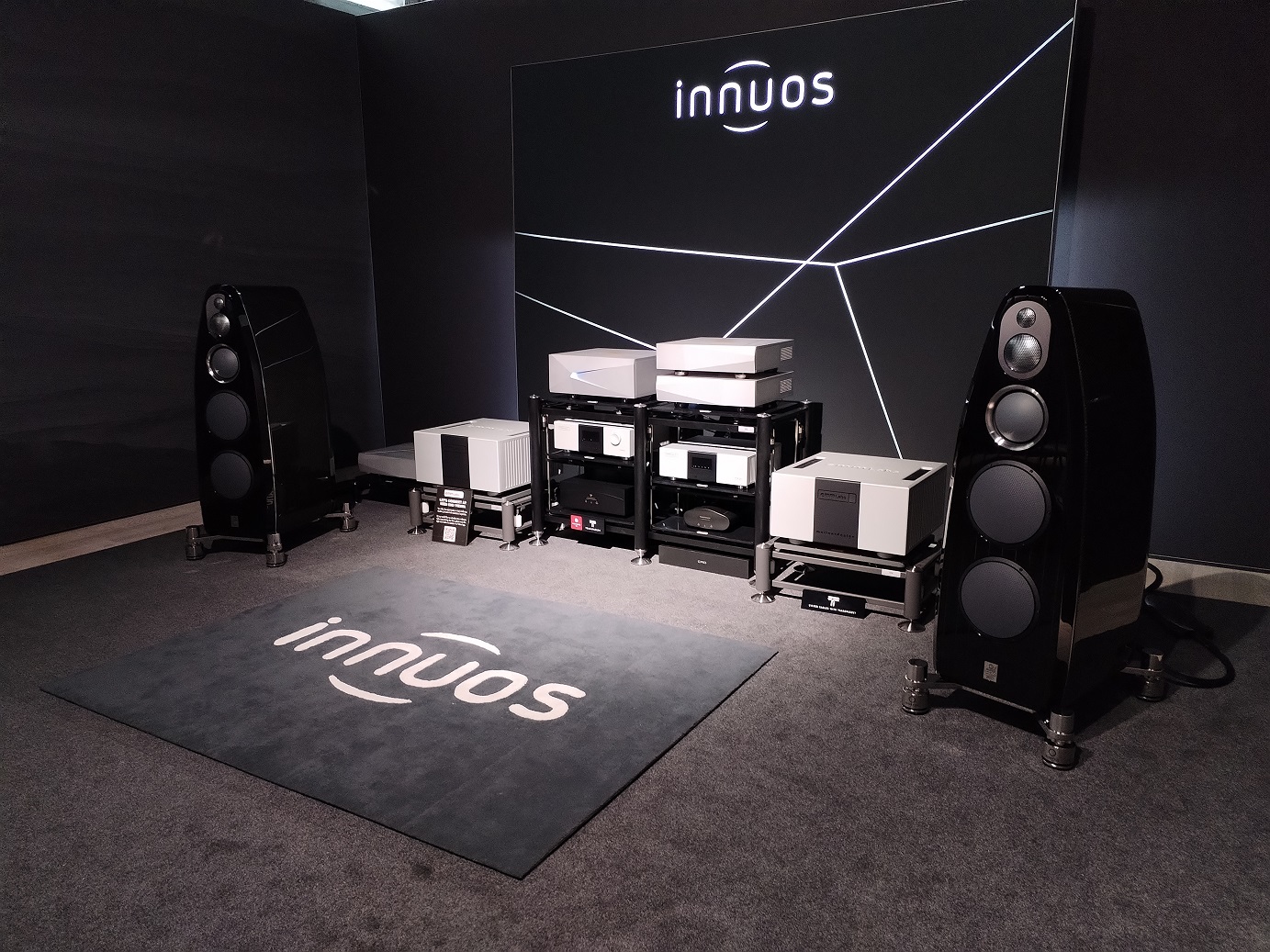
Here the listening was not only pleasant but also interesting, as they demonstrated the differences obtained by using — or bypassing — the Nazaré NET audiophile switch or the Nazaré FLOW reclocker.
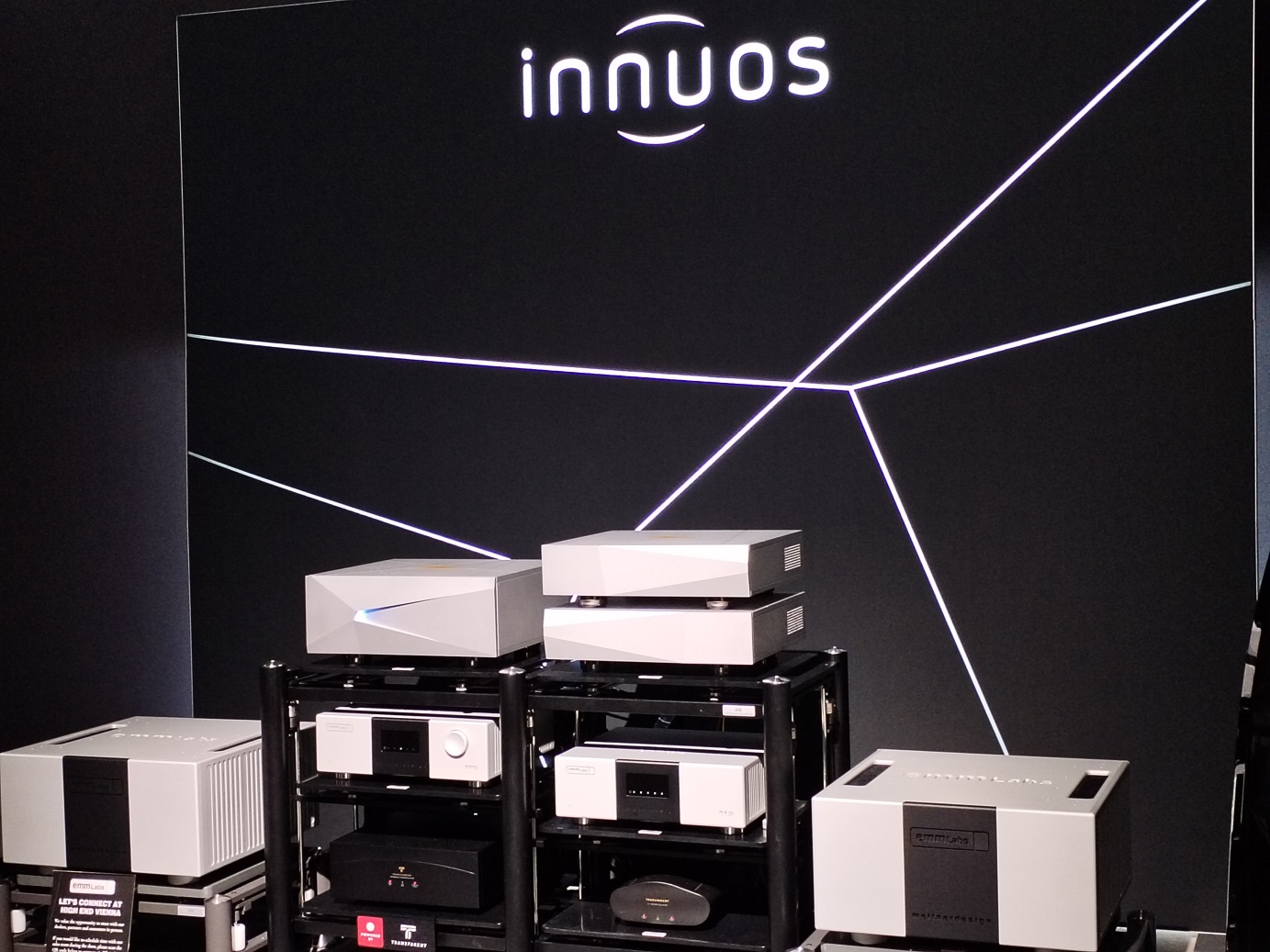
What can I say: the improvement was certainly there, but to these not so audiophile and not so trained ears it seemed truly subtle. Even in the "plain" version, it was already a great listening experience.
I know, I know — you’re curious. All right: the front end costs just under €90,000 (but you can stop at €46,000 for the "basic" Nazaré). For the DAC2i DAC, the PREi preamplifier, and MTRX2 power amps you need about €160,000, and roughly the same amount for the Coltrane Quintet loudspeakers. Then, to replicate that system, you need another €40,000 or so for cables, rack, and other accessories 😄.
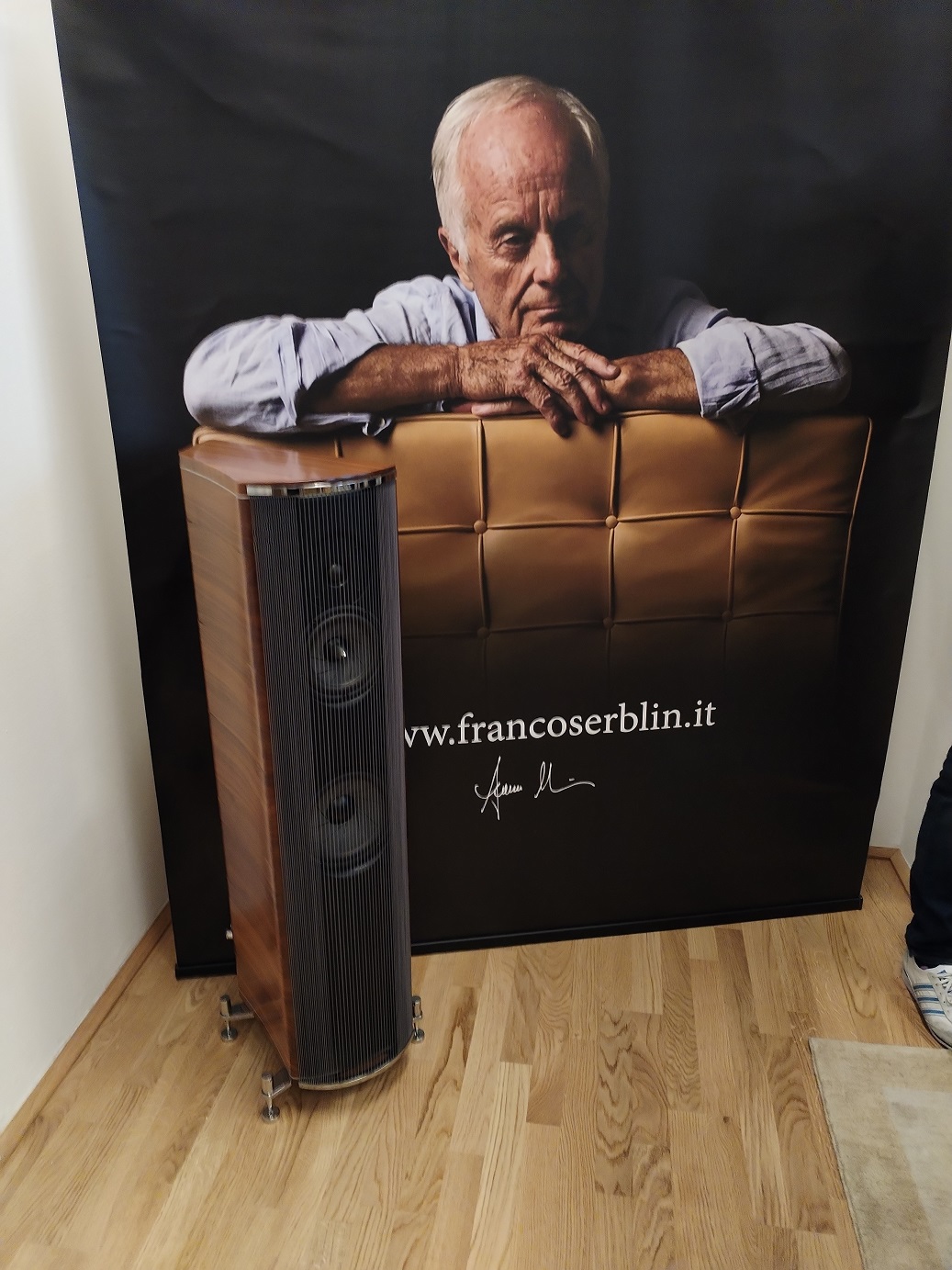
There was more pleasant listening in the FRANCO SERBLIN room, where the very kind Massimiliano Favella had set up a system featuring the ACCORDO GOLDBERG loudspeakers, with ACCUPHASE as the source and NAGRA amplification.
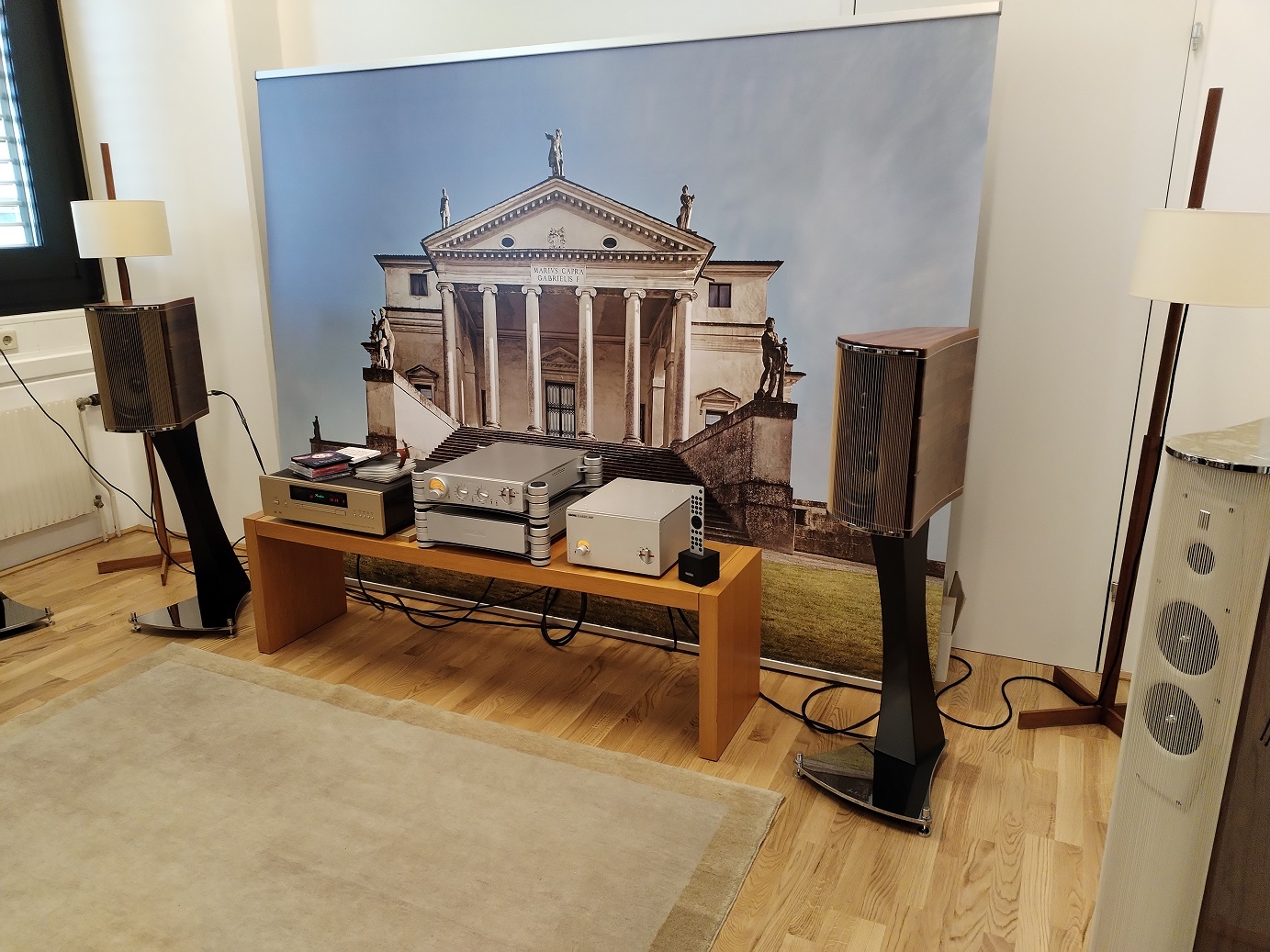
Another example of correct, measured sound — never loud or brash; in a word, pleasant. Certainly the setup helped, and not least the paternal yet watchful gaze of the never forgotten founder.
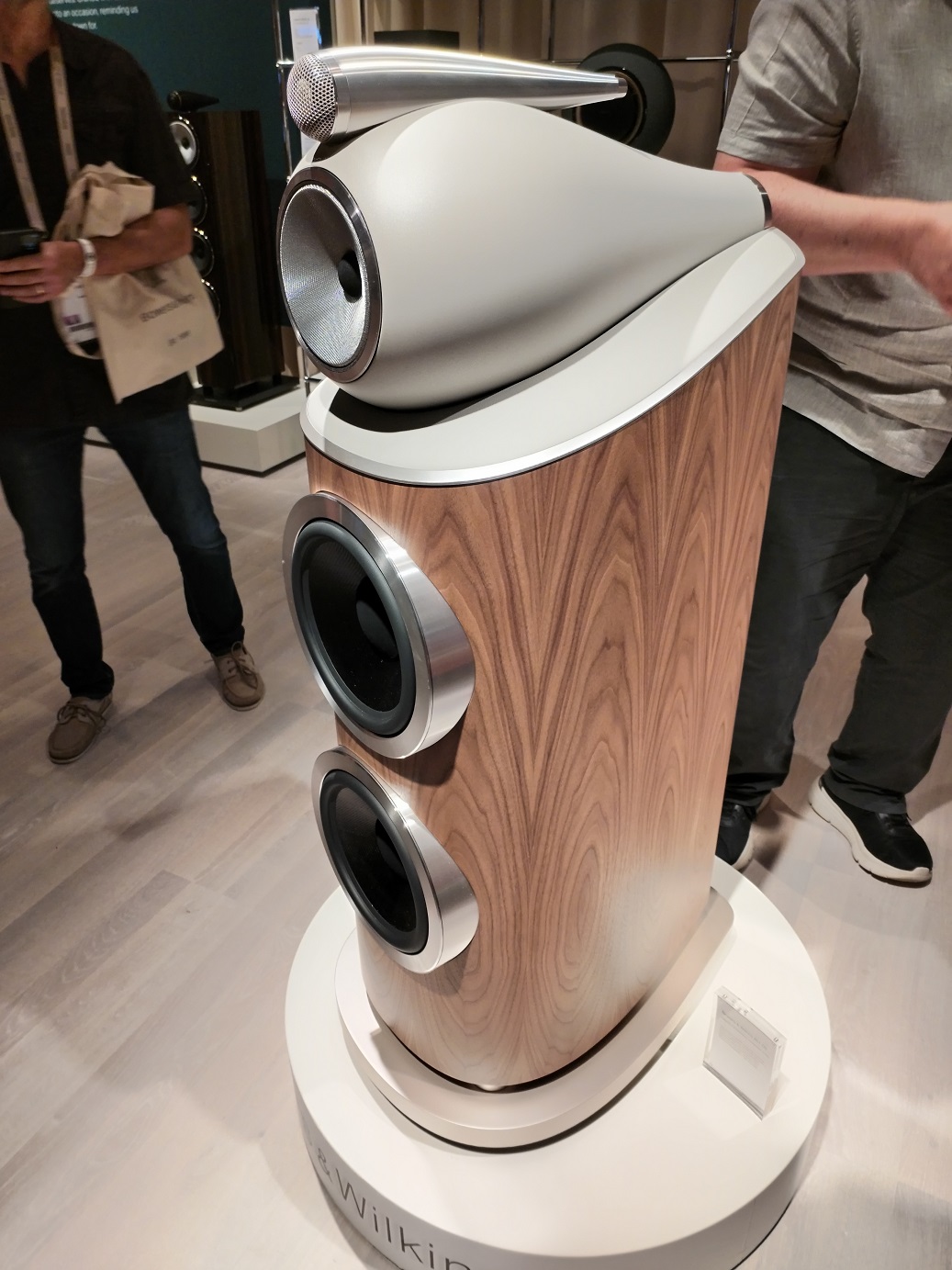
B&W had set up a large exhibition space with DENON, entirely centred on the presentation of the brand new 801 D5, priced at €50,000 per pair, dominating the centre of the room.
Naturally, a listening demonstration was planned, using an INNUOS digital source and MARK LEVINSON preamplifier and a pair of mono power amps. This gave me a detail I hadn’t noticed yet: within the "group", besides Denon there is also MARANTZ, but neither of these historic amplifier brands currently has even a single stereo pre/power combo in their catalogue.
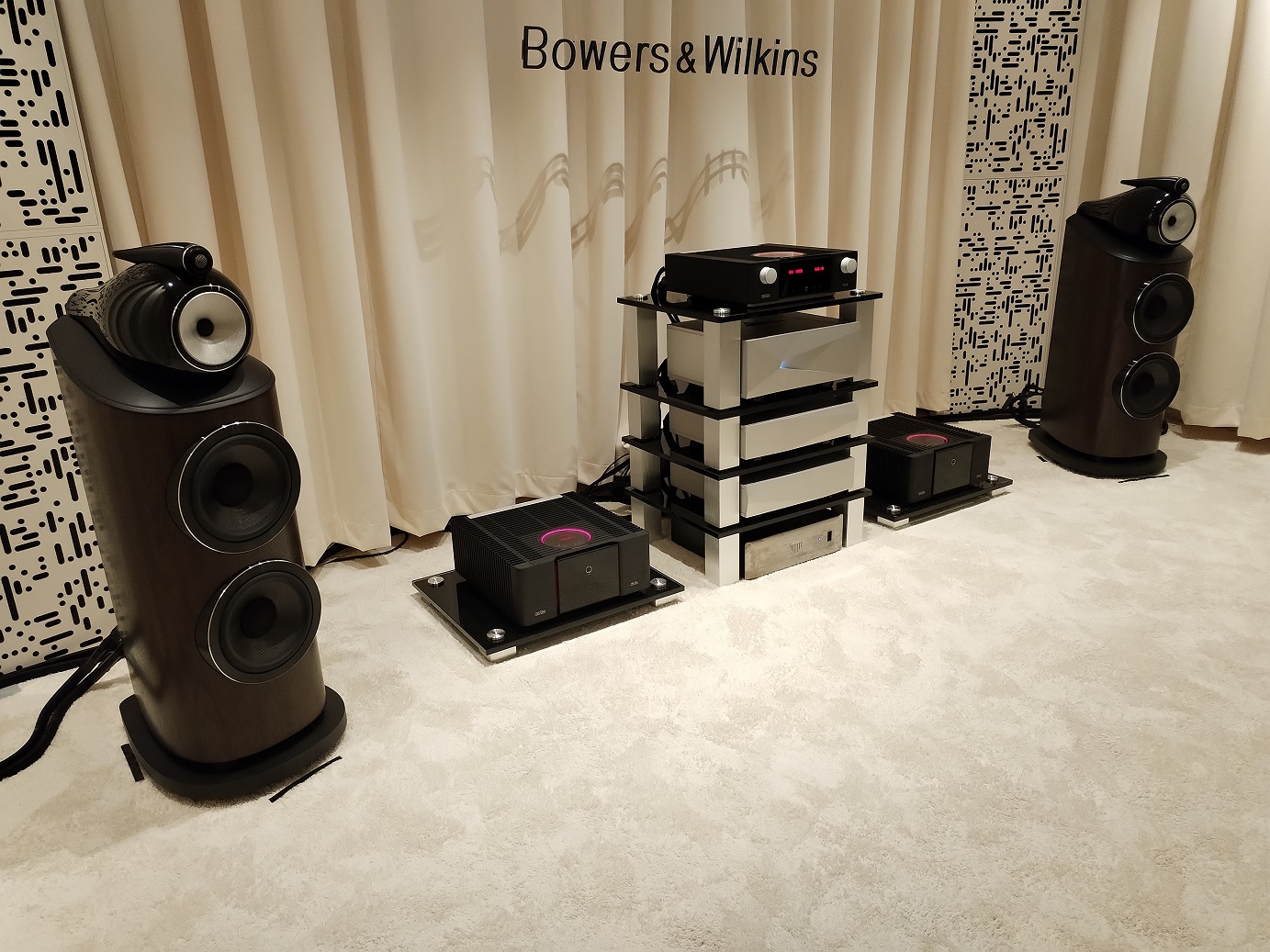
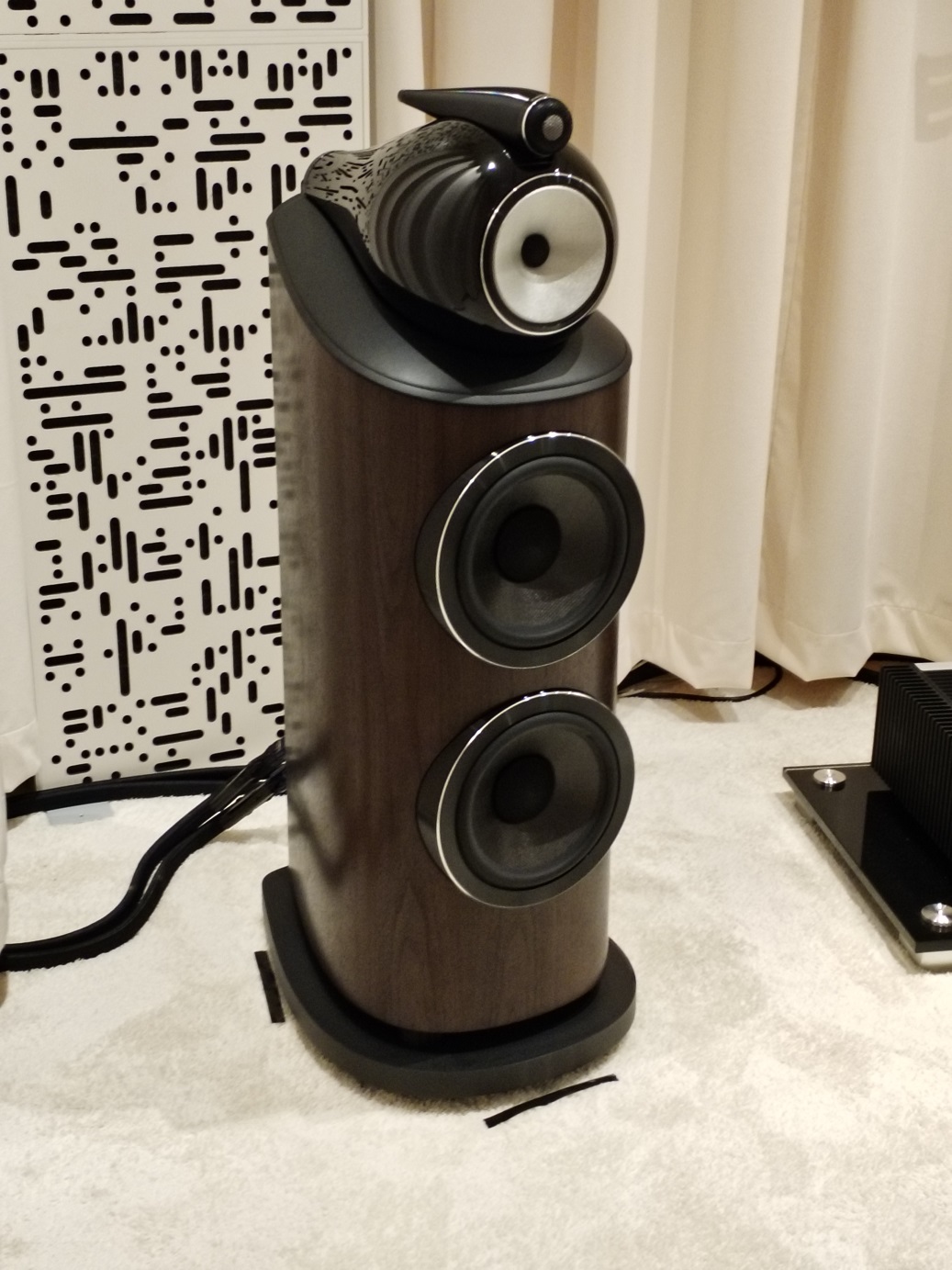
As pleasant as the finish of the static model was, I actually preferred the darker finish of the playing model — after all, these are fairly large loudspeakers, and we all know… black slims 😄.
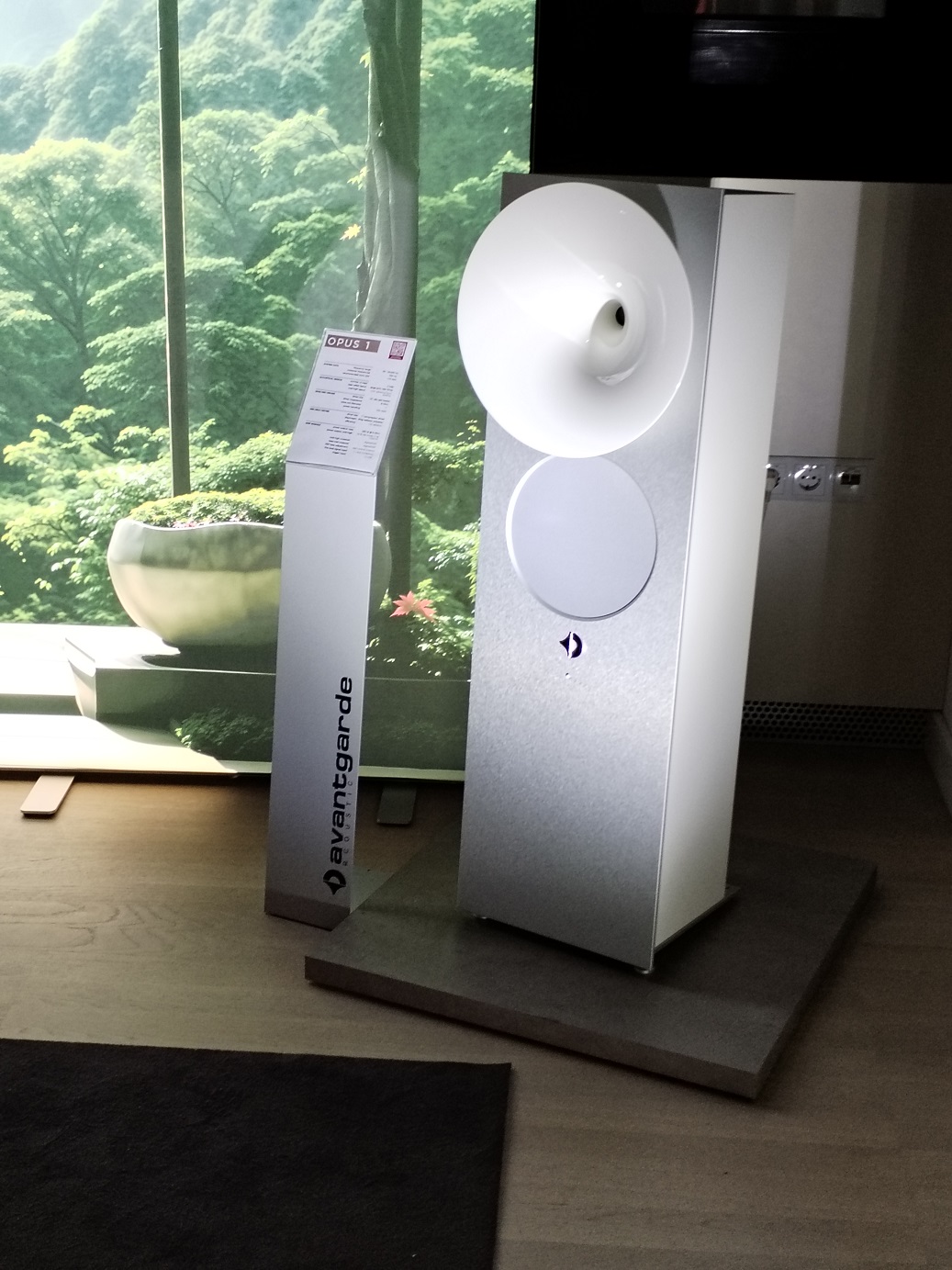
AVANTGARDE proudly presented their OPUS 1, a floor-standing active loudspeaker priced at about €13,000.
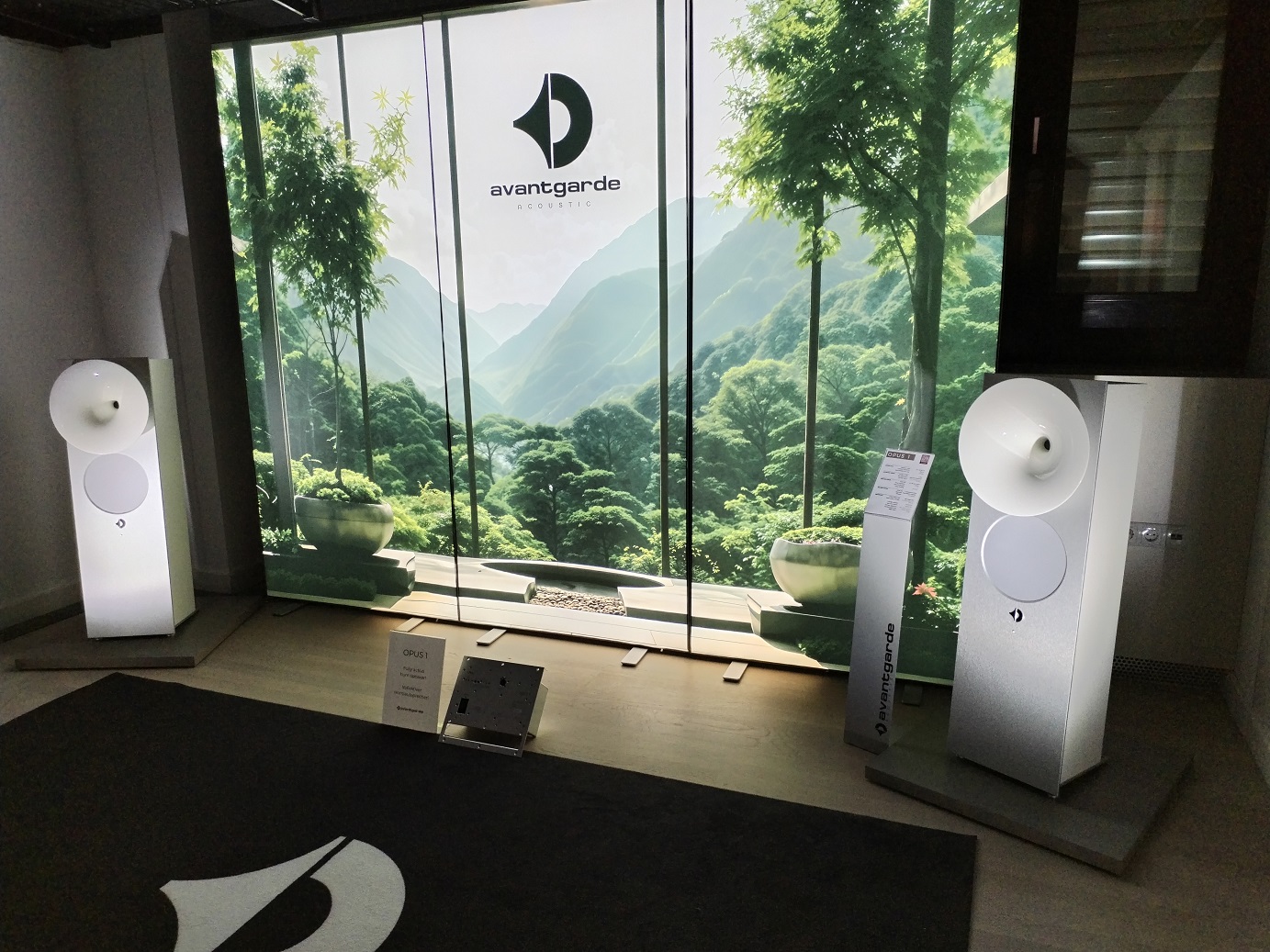
Naturally it sounded good, but something raised a doubt: since they insisted heavily on the fact that this model guarantees powerful bass like the others but with smaller footprint, why not place it in a larger space than the one used — as you can guess from my photo? Not the enormous spaces used in Munich for the big system, but still...
Also, since one of the strengths of Avantgarde loudspeakers has always been high efficiency (the Opus One is rated at 103 dB), what sense does it make to provide built in amplification, thus eliminating the typical advantage — and the "fun" — of choosing your own little amp, perhaps a tube one, to tailor the sound to your taste?
Well, at least the price is contained, considering on one hand the "habits" of this manufacturer and on the other that the loudspeaker comes with two amplifiers. One is a 10 W Class AB amp (with the first watt in Class A) driving the main range (700 Hz to 20 kHz) through Avantgarde’s typical spherical horn. The other is a 250 W amp covering the lower frequencies. They do not declare its operating class, but given the power, size, and lack of cooling elements, I imagine it is a switching module — perhaps not explicitly stated to avoid scaring traditional audiophiles with too many novelties.
In any case, the dimensions of this loudspeaker are indeed compact, and its aesthetics seem easily integrable into a domestic environment. Avantgarde thus offers, at a non astronomical price, a "plug and play" solution without losing its identity, staying far from the "monstrosities" so disliked by our own Editor 😁.
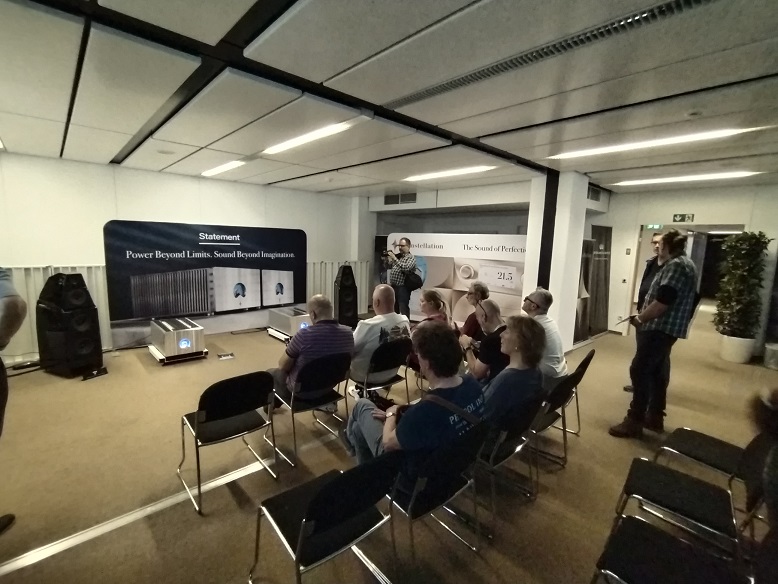
Another exhibition where — as often happened to me in Munich — I heard great sound was CONSTELLATION, showcasing its new top of the line mono power amps, the Statement, priced at about USD 400,000 per pair.
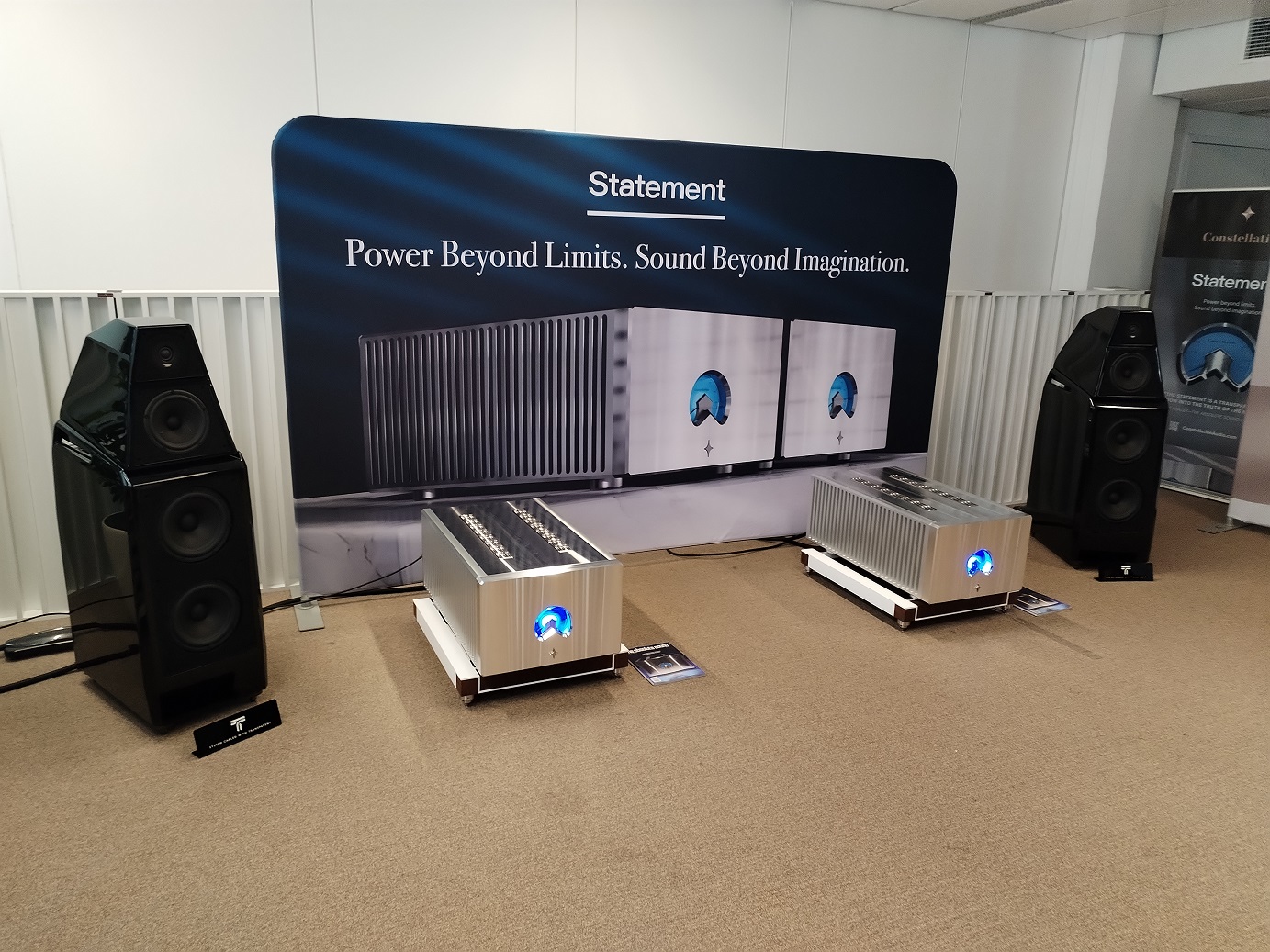
The system featured dCS digital sources and a massive EAT turntable (and tone-arm, and cartridge) as the analogue source. The rest of the Constellation amplification consisted of the PERFORMANCE 2 phono preamp and the ALTAIR 2 preamplifier, another new model, priced at about USD 100,000.
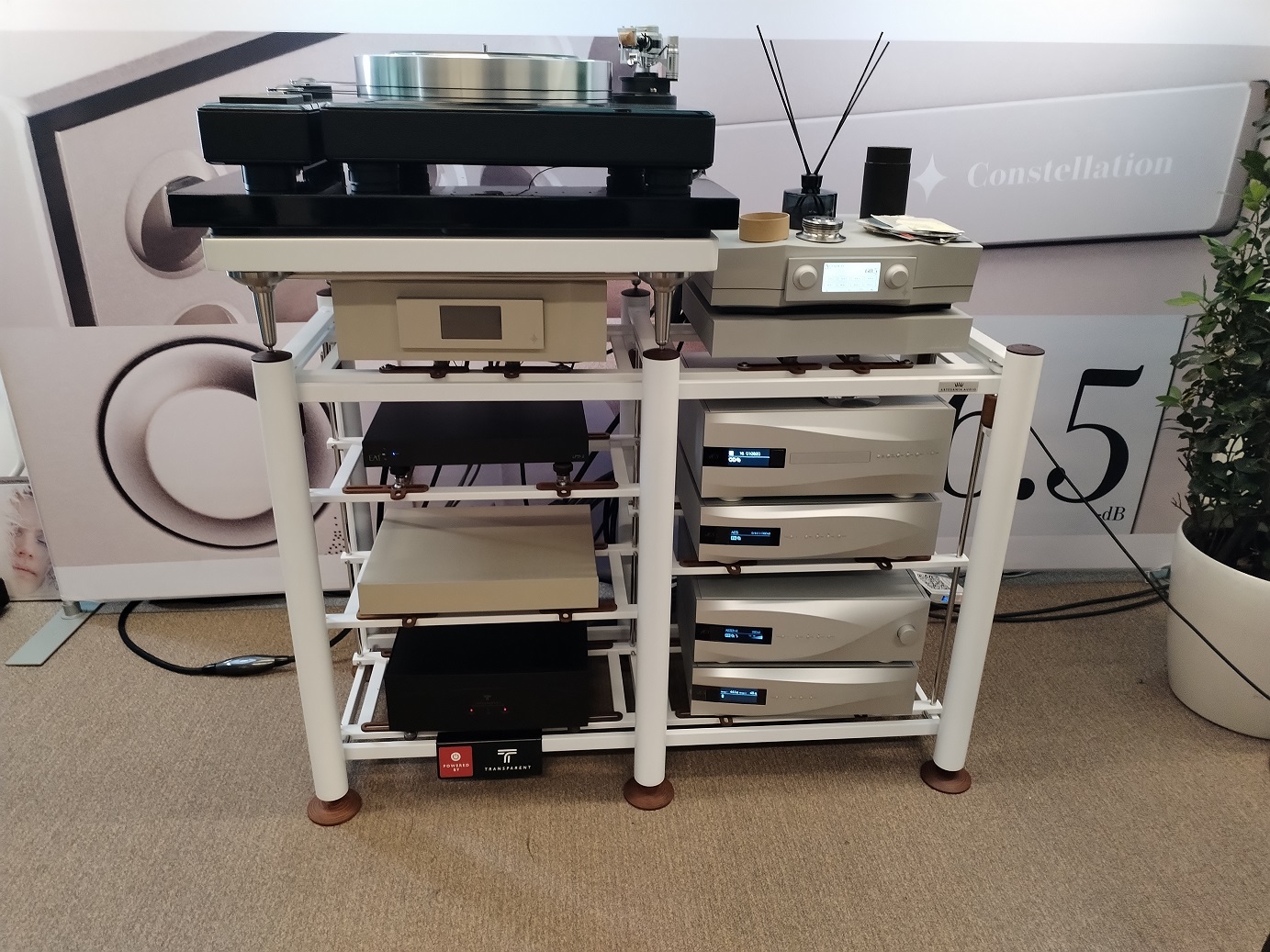
All right, these are figures so high that they make no sense whatsoever. So why mention them? Because this was one of the few systems where the music actually drew people in. Here is a photo taken "after hours": too bad it’s not a video, otherwise you would have noticed some heads nodding while the room was filled with Hendrix...
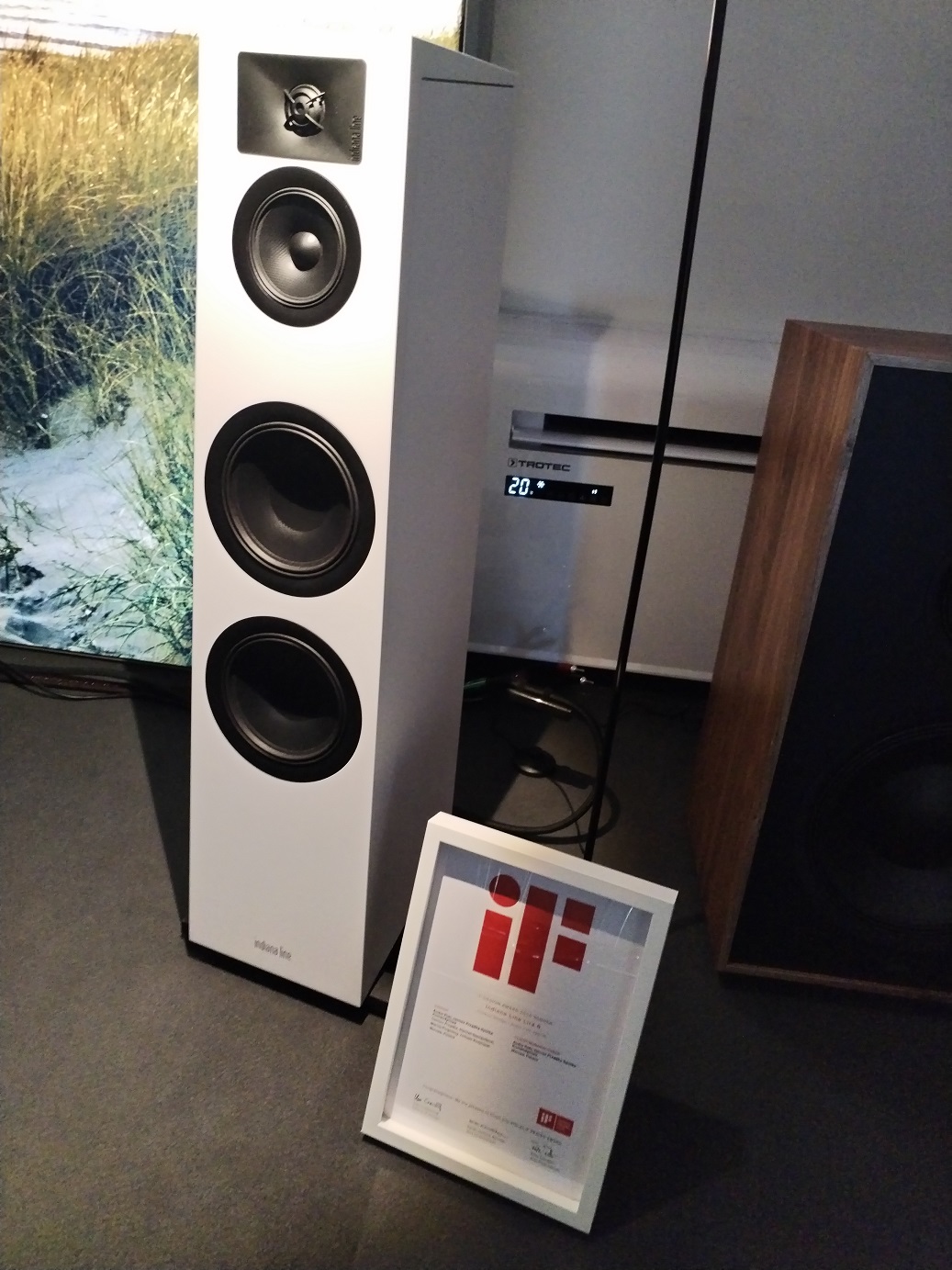
Let's return to more down to earth levels with INDIANA LINE, a historic name in Italian Hi Fi, now based in Poland, where design takes place, while manufacturing is outsourced to China.
In Vienna they showcased their new Lira loudspeaker line, consisting of two stand mount models — Lira 2 and Lira 5 — and one floor-standing model, Lira 6, priced at about €2,500 and winner of the 2026 IF Design Award, pictured below.
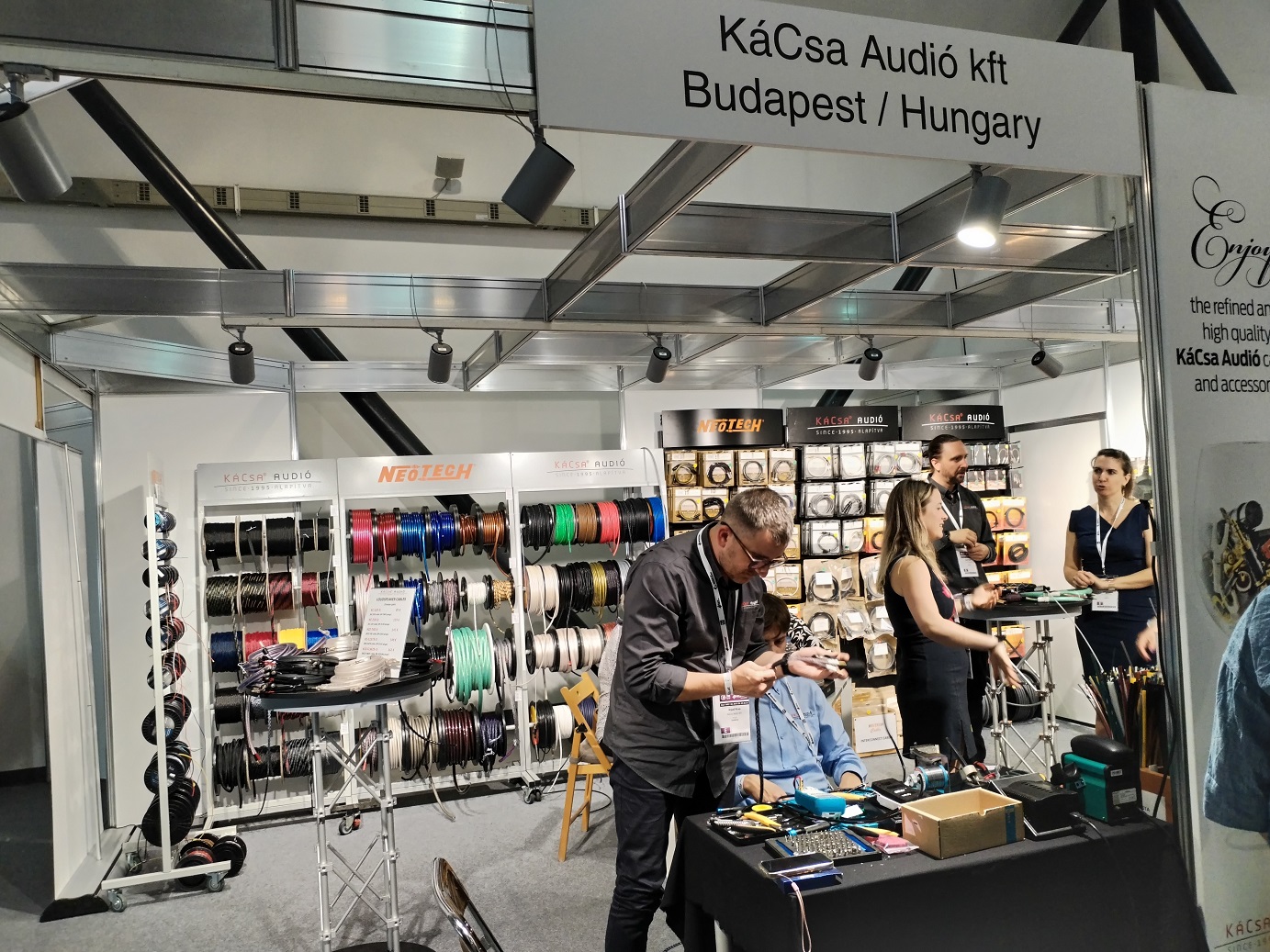
Our friends at KACSA AUDIO were, as always, present with their now traditional workstation, where they build custom cables on the spot, tailored in length and connectors upon request.
In the KLIPSCH exhibition area, great emphasis was placed on the legendary Klipschorn, presented in its 80th anniversary celebratory version, priced at about €30,000 per pair; for the occasion, electronics were provided by Onkyo, a brand reborn after being acquired by the same group.
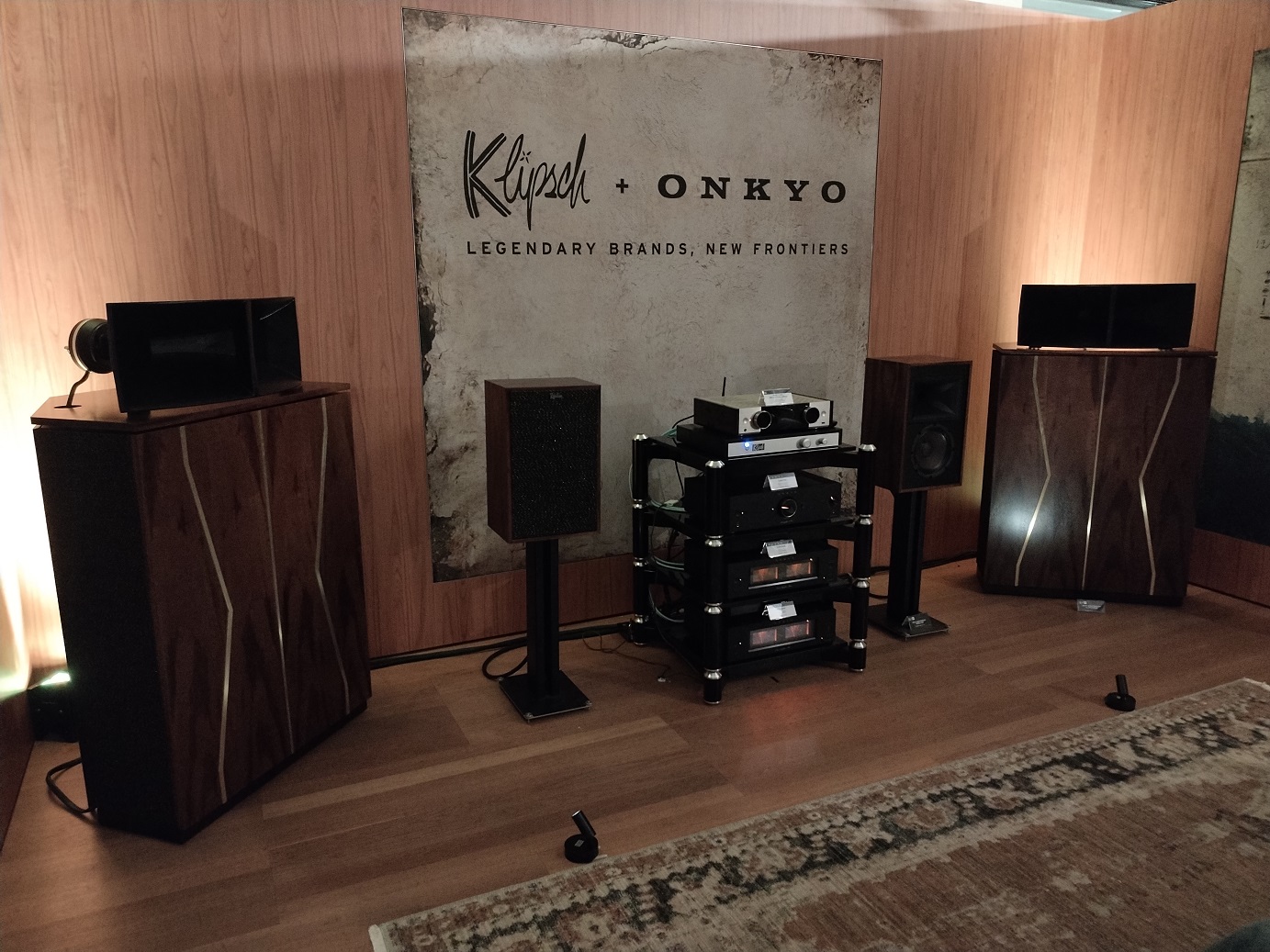
This historic manufacturer also presented a loudspeaker with the system built inside — in fact, an entire series of three stand mount models — THE FIVES II (the white ones), €1,400 – THE SEVENS II, €2,000 – THE NINES II, €2,500.
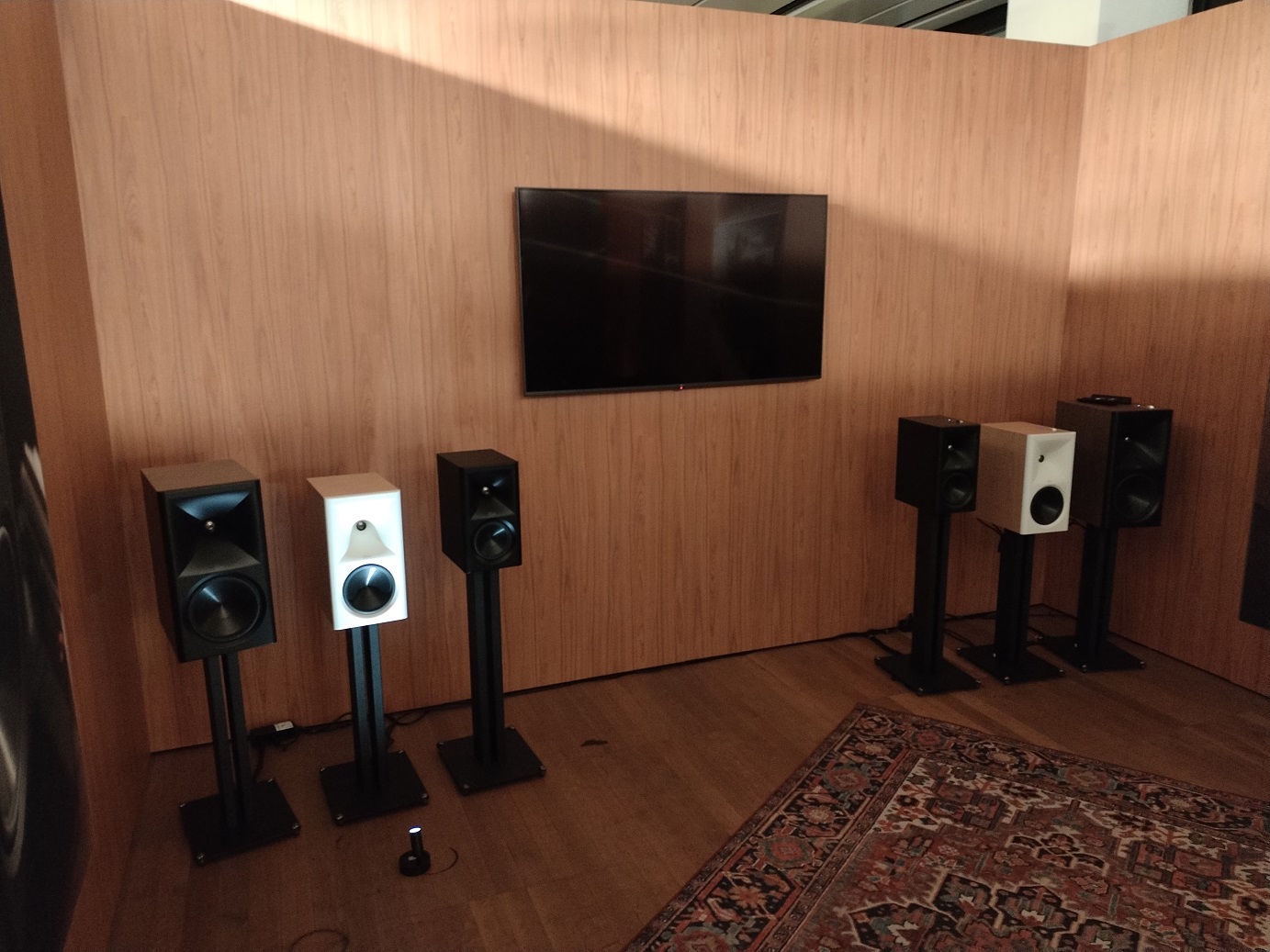
These are active loudspeakers (with Onkyo modules, naturally) featuring streaming capability, Wi Fi connectivity, etc. As you move up the range, you gain more amplifier power and additional functions such as DIRAC room correction, THX certification, and more.
I regret arriving in that room when the show was practically over, with the system silent; but I am sure these solutions deserve the same praise I gave Yamaha earlier.
We now arrive at a room under the expert guidance of veteran Massimo La Vigna, where a system composed of many different brands was masterfully assembled. The turntable was from AMG, with an optical cartridge and matching DS AUDIO phono stage; the streamer (forgive me if I didn’t fully understand how it was configured) fed the digital signal to the new OPAL DAC from PATHOS, which also provided the INPOL Legacy integrated amplifier, driving the Modena floor-standing loudspeakers from MARCO SERRI DESIGN, featuring a hybrid mid high section (one cone driver and one planar driver) with bipolar radiation.
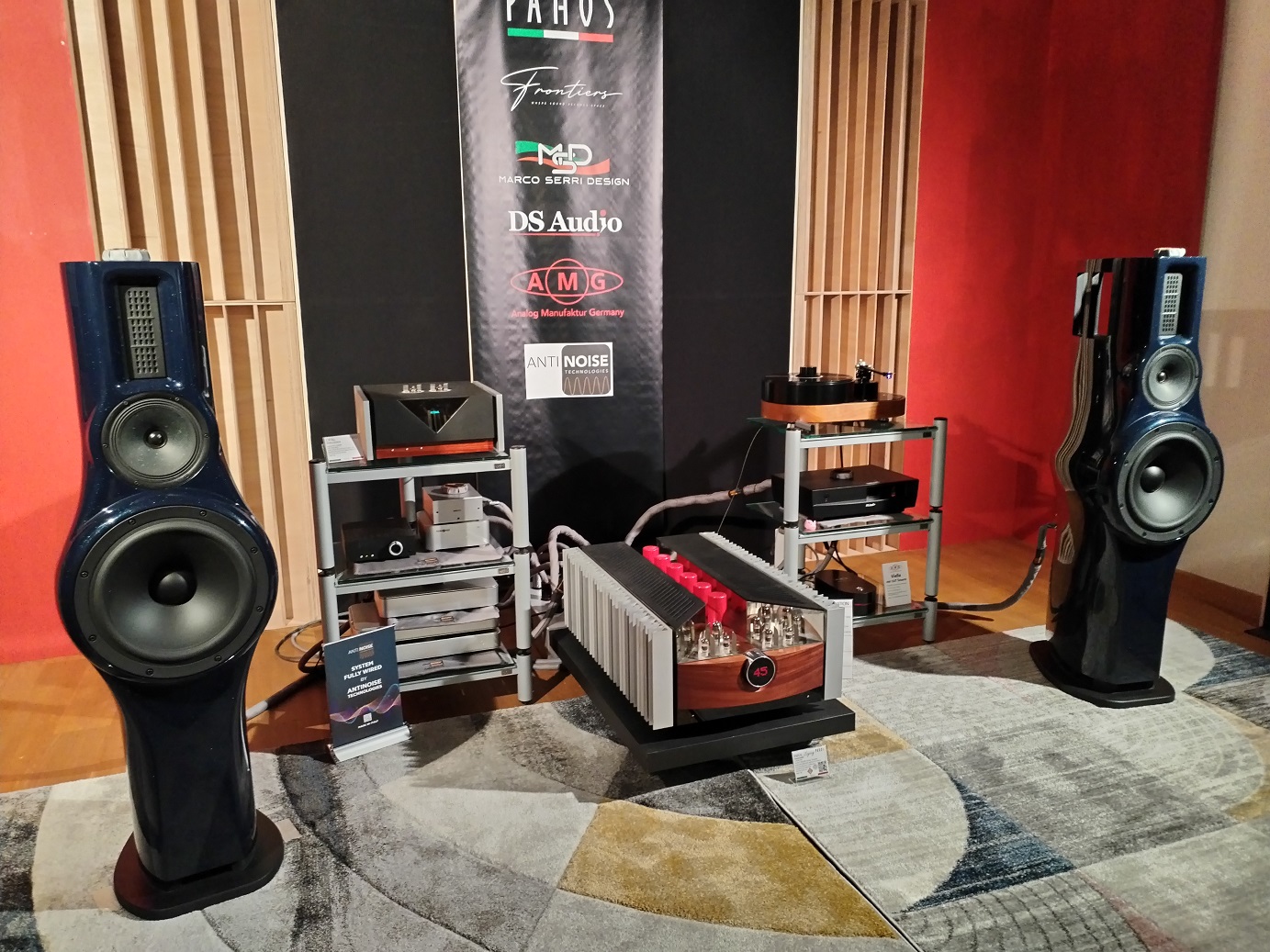
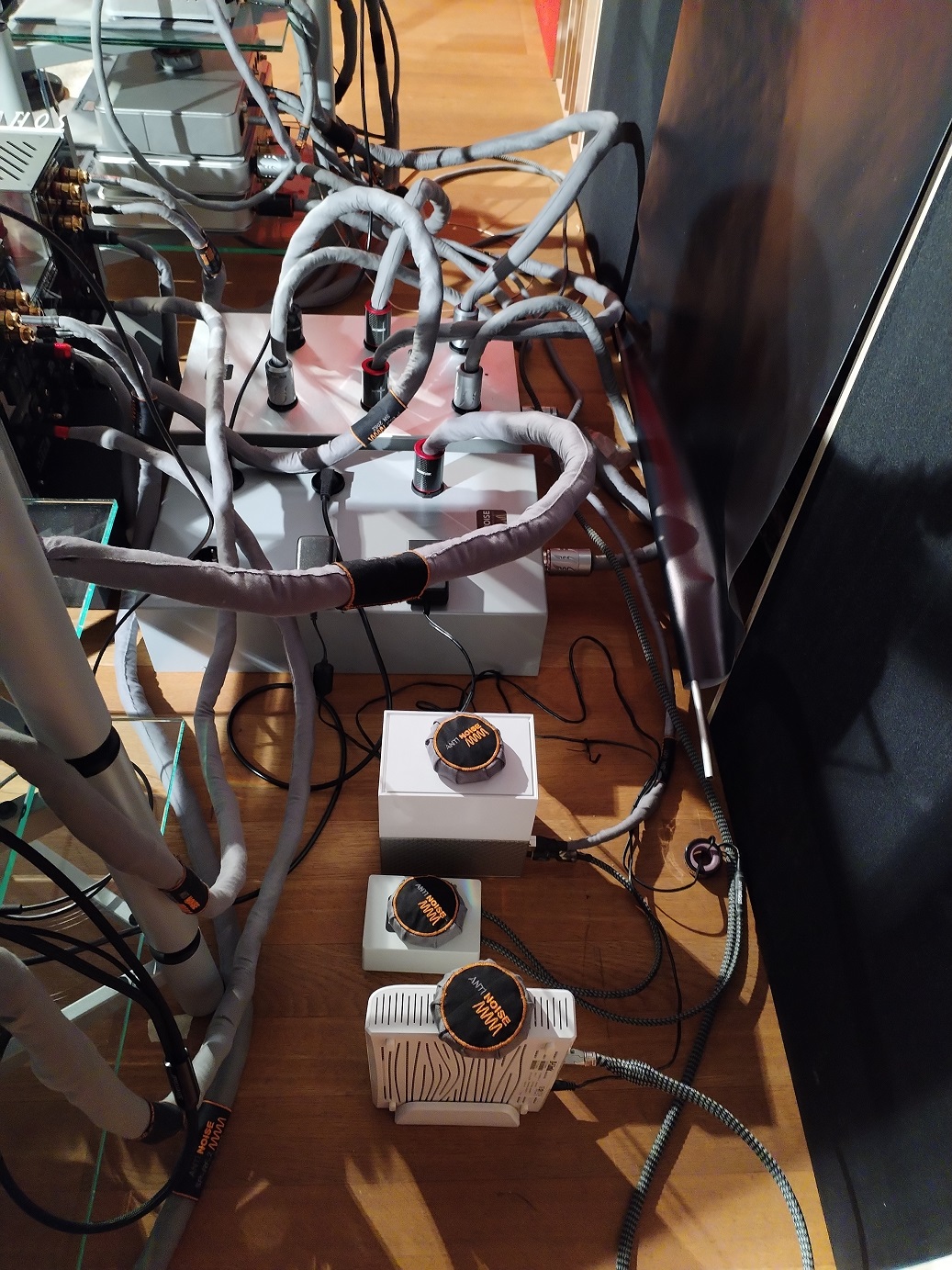
On the speakers you can spot two "caps". These are accessories from ANTINOISE TECHNOLOGIES, another manufacturer which — despite the name — is Italian, and which supplied all the cables for the system, as well as various solutions to combat noise and interference: the discs on the speakers, and also a sort of cushion on which the components rest. The discs act like "magnetic sponges" designed to absorb electromagnetic interference. Below you can see the cable jungle and various discs strategically placed on different devices (including the switch/router) to fight insidious EMI/RFI.
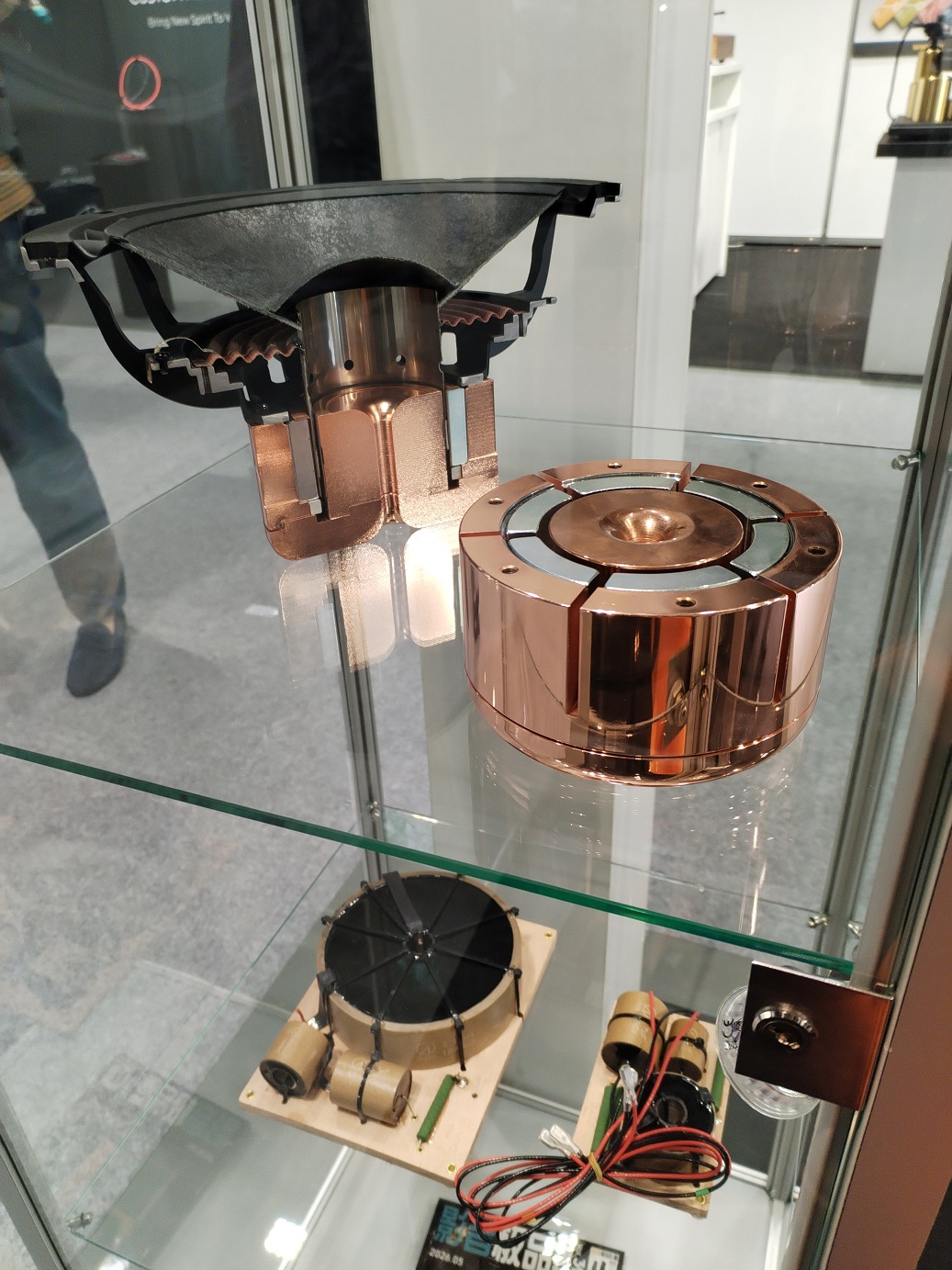
Also exhibiting was URR AUDIO, a Norwegian manufacturer that has recently attracted significant press attention — so much so that Stereophile dedicated a cover to them. Their logo is a runic symbol that, to us Mediterraneans, resembles a capital Phi. In listening was the ICON 12 model (perhaps — I lost my notes…), accompanied Viking style by an axe...
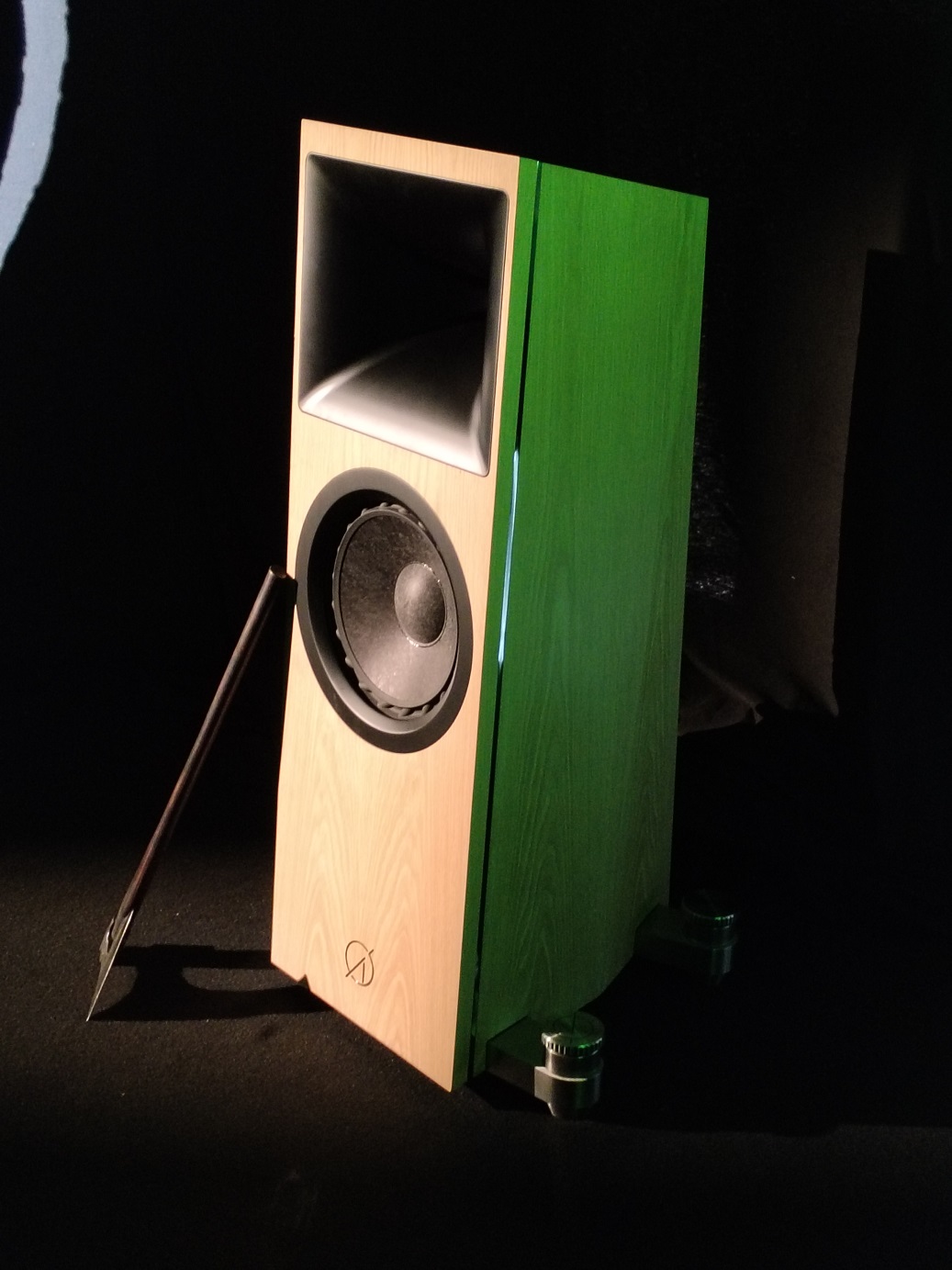
Here is a close up of the direct radiating driver and, below, the crossover: perhaps the photo doesn’t show it well, but both were pretty big..
I’ll close with the VTL exhibition.
In Vienna they occupied a hall at entrance level, a somewhat secluded position — very much in line with the understatement of Luke Manley and Bea Lam, who have always set up minimal, carefully curated exhibitions, avoiding sensationalism or gimmicks to attract the public.
Useless tricks, because the public came on its own, seeking VTL among the exhibitors.
This year’s major novelty was the fully production version of the LOHENGRIN monoblock power amplifier, priced at about €120,000 per pair, driving WILSON ALEXX VFX loudspeakers for the occasion.
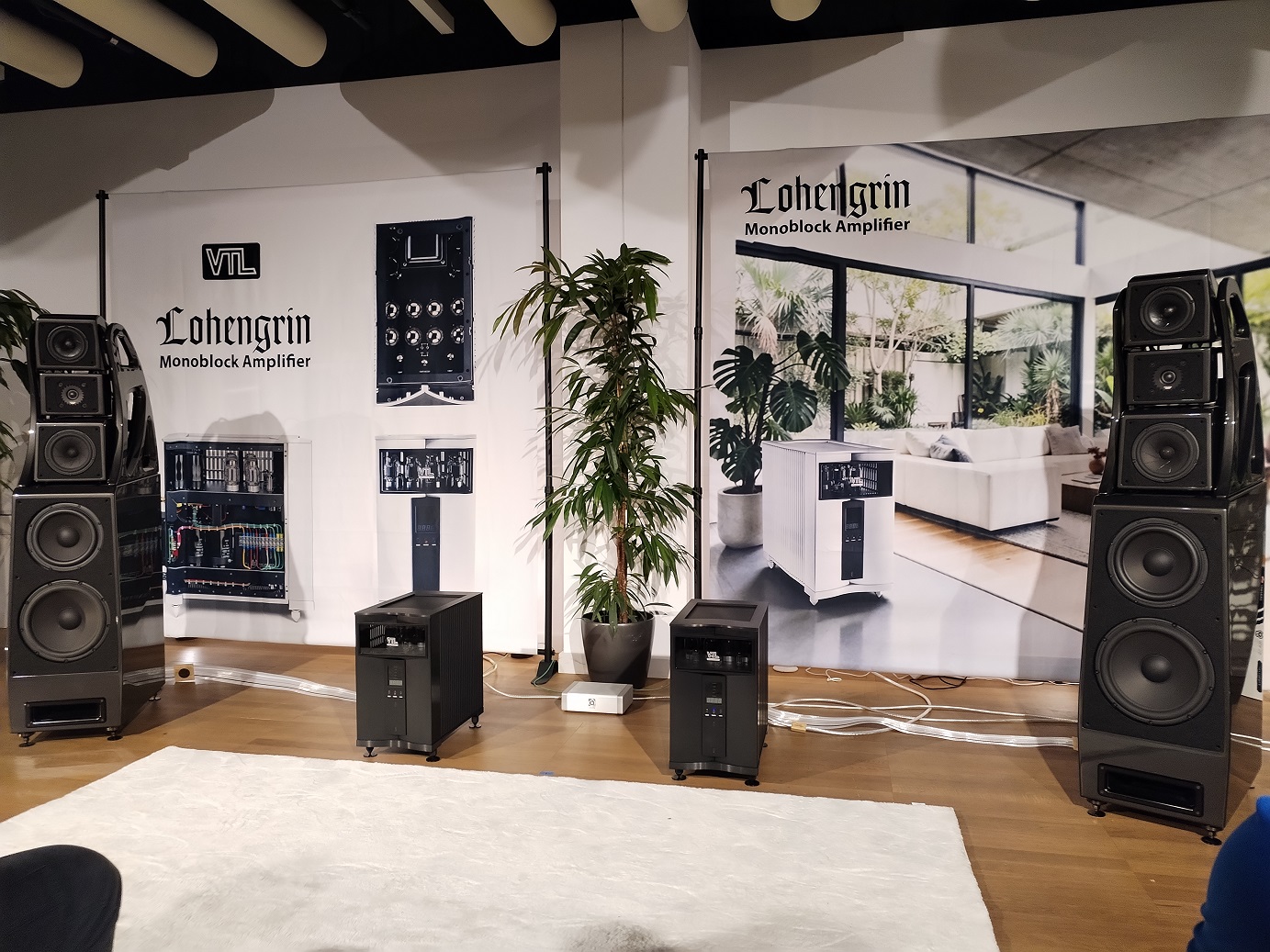
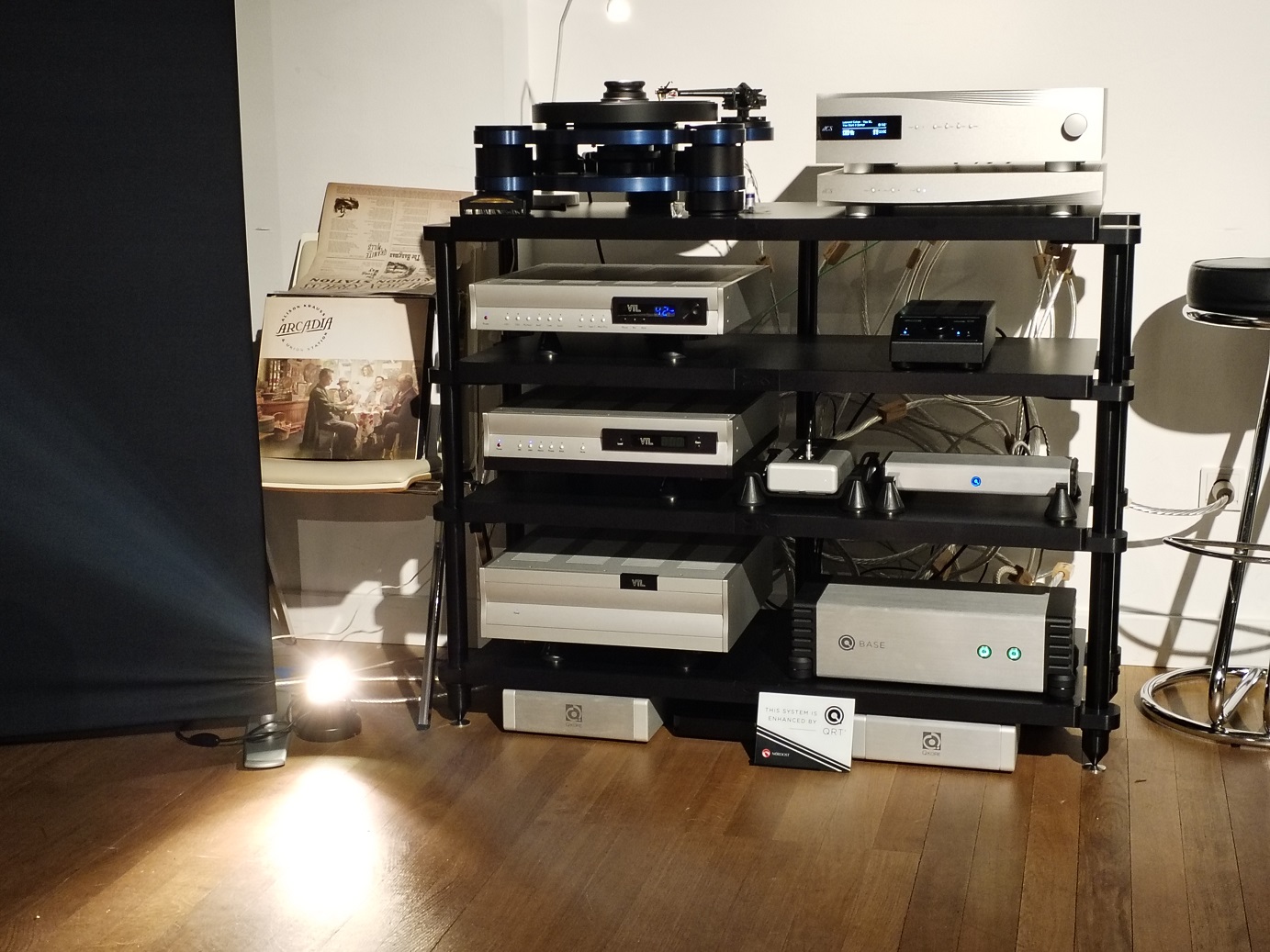
The rest of the system consisted of the SME 3 S turntable, with LYRA ETNA SC LAMBDA cartridge, the dCS ROSSINI digital front-end, and VTL amplification: the TP 6.5 phono preamp and the T 7.5 preamplifier.
Stop
As always, there would be much more to show you, but I think I’ve gone on long enough.
Next year the show will remain in Vienna, and the dates are already set (and there will be no Eurovision Song Contest to push them back…): 6–9 May 2027.
Vienna is a splendid city, offering plenty even to those not interested in spending the whole day inside a convention centre. It’s not a cheap place, but with early planning you can find good solutions for your accommodation, especially considering its excellent public transport.
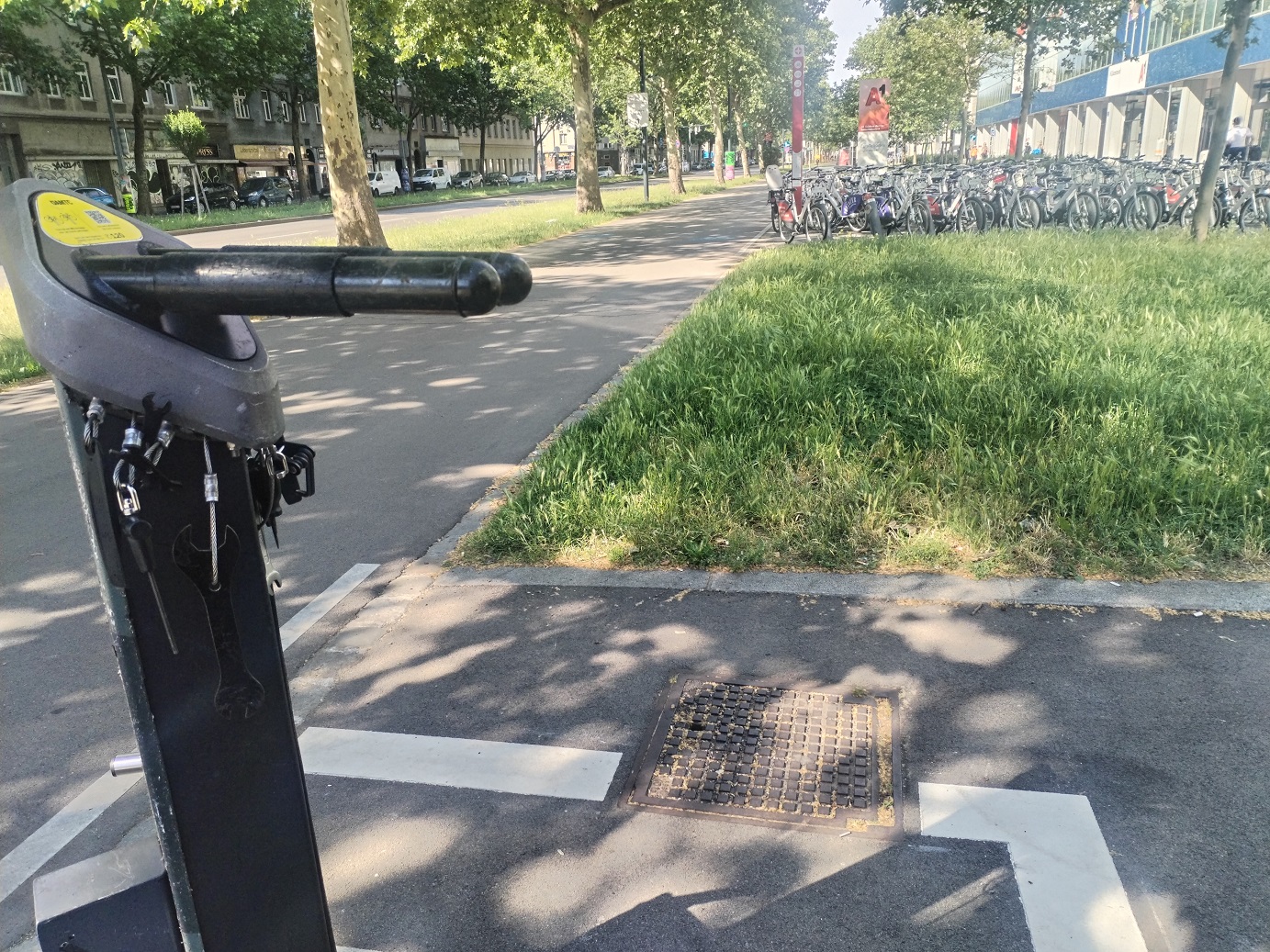
Even our own Editor might enjoy it, as the city is very bike friendly. Just look at this photo of a public station with tools for tyre inflation, adjustments, and quick fixes, and in the background a crowded bicycle parking area. The photo was taken right next to a metro station on the line that directly connects the convention centre with the city centre...
Should you be interested, here are the links to the first part and to the second part of my report.
Did you enjoy this article? You can support our free, advertising-free magazine with a small Paypal donation using the button below. Thank you!

DISCLAIMER. TNT-Audio is neither a shop, nor a HiFi company or a repair laboratory for HiFi components. We don't sell anything. It is a 100% independent magazine that neither accepts advertising from companies nor requires readers to register or pay for subscriptions. If you wish, you can support our independent reviews via a
PayPal donation.
After publication of reviews, the authors do not retain samples other than on long-term loan for further evaluation or comparison with later-received gear.
Hence, all contents are written free of any “editorial” or “advertising” influence, and
all reviews in this publication, positive or negative,
reflect the independent opinions of their respective authors. TNT-Audio will publish all manufacturer responses, subject to the reviewer's right to reply in turn.

Copyright © 2026 Carlo Iaccarino - www.tnt-audio.com
[ Home TNT-Audio | Staff & Contacts | HiFi Playground | Listening tests | DIY & Tweakings | Music & Books ]